When you purchase through links on our site, we may earn an affiliate commission. How it works.
Quick Answer
- Bench pressing with a curl bar is a bad idea for serious chest development.
- The angled grip and shorter length limit load, stability, and proper muscle activation.
- Stick to a straight barbell or dumbbells for effective and safe bench pressing.
Can you bench press with a curl bar?
No. If you’re serious about building a strong chest, don’t bench press with a curl bar. You can lift an EZ curl bar on a bench, but it leads to injury, not gains. This is a hack we see in home gyms and with beginners lacking proper equipment. It’s bro-science, substituting tools and technique for convenience. Don’t fall for it.
An EZ bar is for bicep curls and triceps extensions. Its curved shape offers a natural, semi-supinated grip, reducing wrist and elbow strain for arm isolation. The bench press is a compound movement. It demands a stable, wide, fully pronated grip to hit pectorals, deltoids, and triceps. Forcing a curl bar into this role compromises the entire movement. You’ll limit weight, compromise form, and drastically increase injury risk. Don’t waste your damn time.
Why It Doesn’t Work for Bench Press
Related reading: 4-Day Upper Lower Split: The Complete Workout Plan for Strength & Size
An EZ curl bar is a terrible choice for bench pressing due to biomechanics and practical limitations. This isn’t about ego; it’s about physics and physiology.
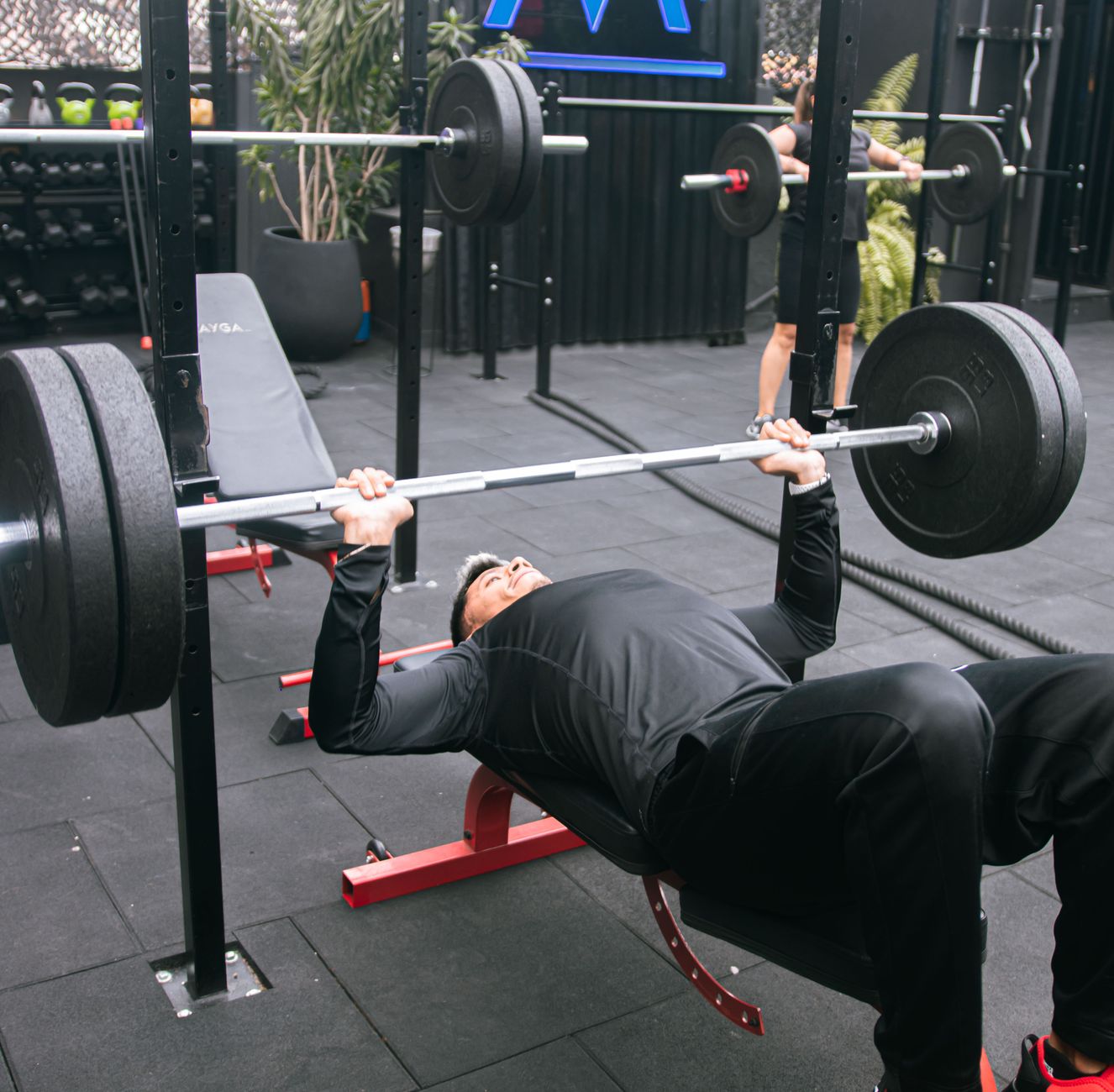
First, grip and wrist position are fundamentally wrong. A proper bench press uses a straight, pronated grip, palms facing your feet, bar resting across the heels of your hands. This aligns forearms vertically, creating a strong pressing platform. An EZ curl bar’s angled grips force wrists into a semi-supinated or internally rotated position. This feels “easier” initially, but it’s detrimental for heavy pressing. It stresses wrist and shoulder joints in movements they aren’t designed for, especially under load. Your wrists will buckle, limiting your drive through the press.
Second, bar length and stability are severely compromised. Most EZ curl bars are shorter and lighter than a standard Olympic barbell. An Olympic bar is 7 feet long, 45 pounds. A curl bar is often 4 feet, weighing 15-25 pounds. This shorter length forces a much narrower grip than optimal for bench press. A narrow grip shifts emphasis to triceps, stressing shoulders, and fails to engage the chest. Furthermore, the short length makes racking and unracking dangerous, especially if lifting alone. You’ll struggle to balance the bar. Added weight exaggerates instability.
Third, limited load and muscle activation. The barbell bench press allows progressive overload with heavy weight, driving maximal chest and upper body strength and hypertrophy. An EZ curl bar’s design flaws—awkward grip, instability, lighter starting weight—severely limit the weight you can safely lift. This means less tension on target muscles (chest, front deltoids, triceps), translating directly to less muscle growth and strength gains. You won’t hit a new bench PR with a curl bar; you’ll hit a wall. Stop half-assing your chest day.
What to Do Instead: The Real Bench Press Technique
If you’re serious about adding plates and building a real chest, use the right tools: a straight barbell or dumbbells. They allow proper form, stability, and progressive overload. We’ve put in the damn work with both; they deliver.
Here’s the breakdown for a proper barbell bench press. No barbell? Skip to the dumbbell section.
Barbell Bench Press
Related reading: Beginner Workout Plan: 3-Day Full-Body Program with 8-Week Progression
This is the king for upper body mass and strength. Don’t cut corners.
| Exercise | Sets | Reps | Rest (Tempo) |
|---|---|---|---|
| Barbell Bench Press | 4 | 6-10 | 90-120 sec |
| Incline Dumbbell Press | 3 | 8-12 | 60-90 sec |
| Dumbbell Flyes | 3 | 12-15 | 60 sec |
| Close-Grip Bench Press | 3 | 8-12 | 60-90 sec |
- Barbell Bench Press: This is your primary movement. Focus on controlled eccentrics (lowering the weight) and explosive concentrics (pressing up).
- Incline Dumbbell Press: Hits the upper chest, allows for a greater range of motion and individual arm stability.
- Dumbbell Flyes: For pec stretch and isolation. Keep the weight light; this is about feeling the stretch, not moving heavy iron.
- Close-Grip Bench Press: This targets triceps, crucial for a strong lockout. You can use an EZ curl bar here if necessary, but a straight bar is superior for maximal load and strength transfer. Some lifters use an EZ curl bar for close-grip bench or skull crushers, finding the angled grip reduces wrist strain for tricep isolation. For a true bench press, however, stick to the straight bar.
Dumbbell Bench Press (Alternative)
Stuck in a home gym without a full barbell setup? Dumbbells are your best friend. They offer great range of motion and force each side to work independently, addressing imbalances.
| Exercise | Sets | Reps | Rest (Tempo) |
|---|---|---|---|
| Flat Dumbbell Press | 4 | 8-12 | 90-120 sec |
| Incline Dumbbell Press | 3 | 10-15 | 60-90 sec |
| Decline Dumbbell Press | 3 | 10-15 | 60-90 sec |
| Push-ups (weighted) | 3 | Max reps | 60 sec |
- Flat Dumbbell Press: Focus on a deep stretch at the bottom and a powerful contraction at the top. Control the weight; don’t let it just drop.
- Incline Dumbbell Press: Angle the bench up to hit the upper chest.
- Decline Dumbbell Press: Targets the lower chest. If your bench doesn’t decline, use dips as an alternative.
- Push-ups (weighted): A bodyweight staple. Add a plate on your back for progression.
Progression
This is where gains happen. No progression means stagnation. It’s that simple.
For barbell and dumbbell pressing:
- Linear Progression: The most straightforward path. Once you hit the top end of your rep range for all sets (e.g., 4 sets of 10 reps), increase the weight by the smallest increment possible (e.g., 5 lbs on a barbell, 2.5 lbs per dumbbell) for your next session. Then, work to hit those reps with the new weight.
- Rep Progression: If you can’t add weight, aim to add reps. If you did 4 sets of 8 reps last week with 185 lbs, try for 4 sets of 9 reps this week with the same weight. When you hit 4 sets of 10, then add weight.
- Tempo and Pauses: For advanced lifters, or when you’re stalled, introduce tempo work or pause reps. Lower the bar slowly (3-4 seconds down), or pause for 1-2 seconds at the bottom of the rep. This increases time under tension and builds strength out of the hole, but don’t do this until your form is dialed in.
Consistency is key. Show up, put in the damn work, and demand more every session.
Form Cues & Common Mistakes
Perfect form is non-negotiable for safety and gains. Screw it up, and you invite injury, leaving strength on the table. This applies to a proper bench press, not some curl bar nonsense.
Form Cues to Nail
- Set Your Foundation: Lie on the bench with your eyes directly under the bar. Retract your shoulder blades hard, squeezing them together like you’re trying to hold a pencil between them. This creates a stable base and protects your shoulders.
- Arch Your Back (Slightly): A natural, slight arch in your lower back is normal and helps create leverage. Don’t go crazy with an extreme arch, but avoid flattening your back completely against the bench.
- Feet Flat and Driven: Keep your feet flat on the floor, driving them into the ground throughout the lift. This leg drive is crucial for stability and power. Maintain five points of contact: head, shoulders, glutes, and both feet.
- Grip It Right: For a barbell, use a pronated (palms down) grip, slightly wider than shoulder-width. Your forearms should be perpendicular to the floor at the bottom of the movement. Wrap your thumbs around the bar – never use a “suicide grip” unless you want to drop the bar on your face.
- Unrack with Control: Take a deep breath, brace your core, and unrack the bar with straight arms. Bring it directly over your mid-chest.
- Lower with Control: Lower the bar to your mid-chest, just below the nipple line. Control the descent, aiming for a consistent path. Your elbows should be at about a 45-degree angle to your body, not flared straight out. Don’t bounce the bar off your chest.
- Press with Power: Drive the bar back up in a slight arc, exhaling as you press. Think about pushing yourself into the bench, not just pushing the bar away. Lock out your elbows at the top of each rep, but don’t hyper-extend.
Common Mistakes That Kill Progress
- Ego Lifting: Loading too much weight and sacrificing form. You’re only fooling yourself. Drop the weight, perfect the movement, then build back up. This is the hard truth.
- Flaring Elbows: Letting your elbows flare out to 90 degrees puts immense stress on your shoulder joints and reduces chest activation. Keep them tucked in, around 45 degrees.
- Lack of Leg Drive: Your legs are part of the bench press. Use them to create a stable, powerful base.
- Bouncing the Bar: Using your chest as a trampoline is not a rep. It’s cheating, and it’s dangerous. Control the weight.
- Not Using Spotter Arms: If you’re lifting heavy, especially alone, safety spotter arms are non-negotiable. They can prevent serious injury or even death from a dropped bar. Don’t be a hero; be smart.
Gear We Use
We don’t endorse magic pills or fancy gadgets. But some gear is essential for serious lifting, especially in a home gym. For heavy benching, safety is crucial. We recommend a solid set of power rack safety spotter arms. These are your lifesavers when you hit failure, letting you push to the limit without crushing yourself. They’re simple, effective, and will save your ass when the weight gets heavy. You can find robust options for around $60-$100, depending on your rack’s specifications.
Power Rack Safety Spotter Arms
FAQ
Can I do close-grip bench press with an EZ curl bar?
Some lifters use an EZ curl bar for close-grip bench press or triceps extensions to reduce wrist strain. However, a straight barbell is superior for maximizing load and strength development in the close-grip bench press. The EZ bar’s primary benefit is for isolation movements like curls and skull crushers.
What are the main dangers of bench pressing with a curl bar?
Main dangers include wrist and shoulder injury from the awkward grip, limited stability making weight control difficult, and reduced ability to progressively overload. This hinders strength and muscle gains. It simply isn’t designed for heavy pressing.
Is dumbbell bench press better than using an EZ curl bar for chest?
Absolutely. Dumbbell bench press is a far superior alternative to an EZ curl bar for chest development. Dumbbells allow greater range of motion, force each side to work independently, and reduce wrist strain compared to forcing a curl bar into a pressing movement.
What’s the ideal grip width for a barbell bench press?
The ideal grip width for a barbell bench press is typically slightly wider than shoulder-width. At your chest, forearms should be roughly perpendicular to the floor. This balances chest, shoulder, and triceps activation, optimizing leverage.
Can an EZ curl bar be used for any chest exercises?
An EZ curl bar is not ideal for primary chest exercises. Its design suits bicep curls, triceps extensions (like skull crushers or overhead extensions), and sometimes upright rows. For chest, you need a straight bar or dumbbells to hit muscles effectively and safely.
Conclusion
Cut the bullshit. Bench pressing with a curl bar is a waste of time and an invitation to injury. It’s a hack born from ignorance or lack of proper equipment. It will never deliver the chest size and strength you’re chasing. The angled grips, short length, and inherent instability mean you’ll lift less, risk more, and get nowhere fast.
If you’re serious about building a powerful chest, use a straight barbell. No barbell? Grab dumbbells. They offer a legitimate path to gains, allowing proper form, progressive overload, and real muscle activation. Ditch the curl bar for curls and skull crushers, where it belongs. Get the right tools, put in the damn work with proper form, and you’ll see results. There are no shortcuts to strength.
Related Articles
- How Much Protein Do You Actually Need Per Day to Build Muscle for Serious Lifters 2026
- Bulking vs Cutting for Serious Lifters: How to Do Both Right and When to Switch in 2026
- How to Build a Push Day Workout for Serious Lifters: Exercises, Sets, & Reps (2026)
- HIIT vs Steady State Cardio: Which Burns More Fat and When to Use Each
Where to Buy


💬 Join the Conversation
Have thoughts on this article? We'd love to hear from you.