When you purchase through links on our site, we may earn an affiliate commission. How it works.
Quick Answer
- The deadlift is a full-body compound movement that primarily targets the posterior chain, core, and back.
- Proper form is non-negotiable for maximal muscle activation across the entire kinetic chain and injury prevention.
- Focus on engaging muscles deliberately through the full range of motion, not just moving weight off the floor.
The deadlift muscles worked extend far beyond just your back. Anyone telling you otherwise is either weak, misinformed, or hasn’t put in the damn work to understand this primal movement. We see it every day: guys in the gym yanking weight, rounding their backs, hips shooting up like a stripper pole, all to claim a number that means nothing when your form is garbage. This isn’t about moving weight; it’s about moving it right to build actual, undeniable strength and mass.
The deadlift is the king of lifts for a reason. It demands total body tension, recruits more muscle fibers than almost any other exercise, and forges raw, functional power. But if you’re not activating the right muscles, you’re not just leaving gains on the table—you’re begging for an injury. We’re cutting through the bro-science bullshit and showing you exactly how to engage every relevant muscle, from the setup to the lockout, so you can stop ego lifting and start building a real beast. This isn’t a magic pill. This is the hard truth about what it takes to master the deadlift and unlock its full potential for building a truly powerful physique.
Why the Deadlift is King: What Muscles Does It Really Hit?
The deadlift is a fundamental human movement: picking something heavy off the ground. Your body is engineered for it. When executed correctly, it’s a synergistic symphony of muscle groups firing in concert. This isn’t an isolation exercise; it’s a compound lift that taxes your entire system, driving hormonal responses that support overall growth and strength. It works because it forces your body to operate as a single, powerful unit against resistance.
Your posterior chain—the entire backside of your body—gets hammered. This includes your glutes, hamstrings, and erector spinae (lower back). But it doesn’t stop there. Your lats are crucial for keeping the bar close and your spine rigid. Your traps and rhomboids engage to stabilize your upper back. Your forearms and grip muscles scream as you cling to the bar. Even your quads play a significant role in the initial pull, driving the floor away. And let’s not forget the core—your abs and obliques—which must brace hard to prevent spinal flexion and maintain stability throughout the lift. This is a total body assault, and that’s why it works so damn well for building raw power and dense muscle. You can’t fake this kind of strength.
How to Execute a Proper Deadlift: The Full Technique Breakdown
Related reading: 4-Day Upper Lower Split: The Complete Workout Plan for Strength & Size
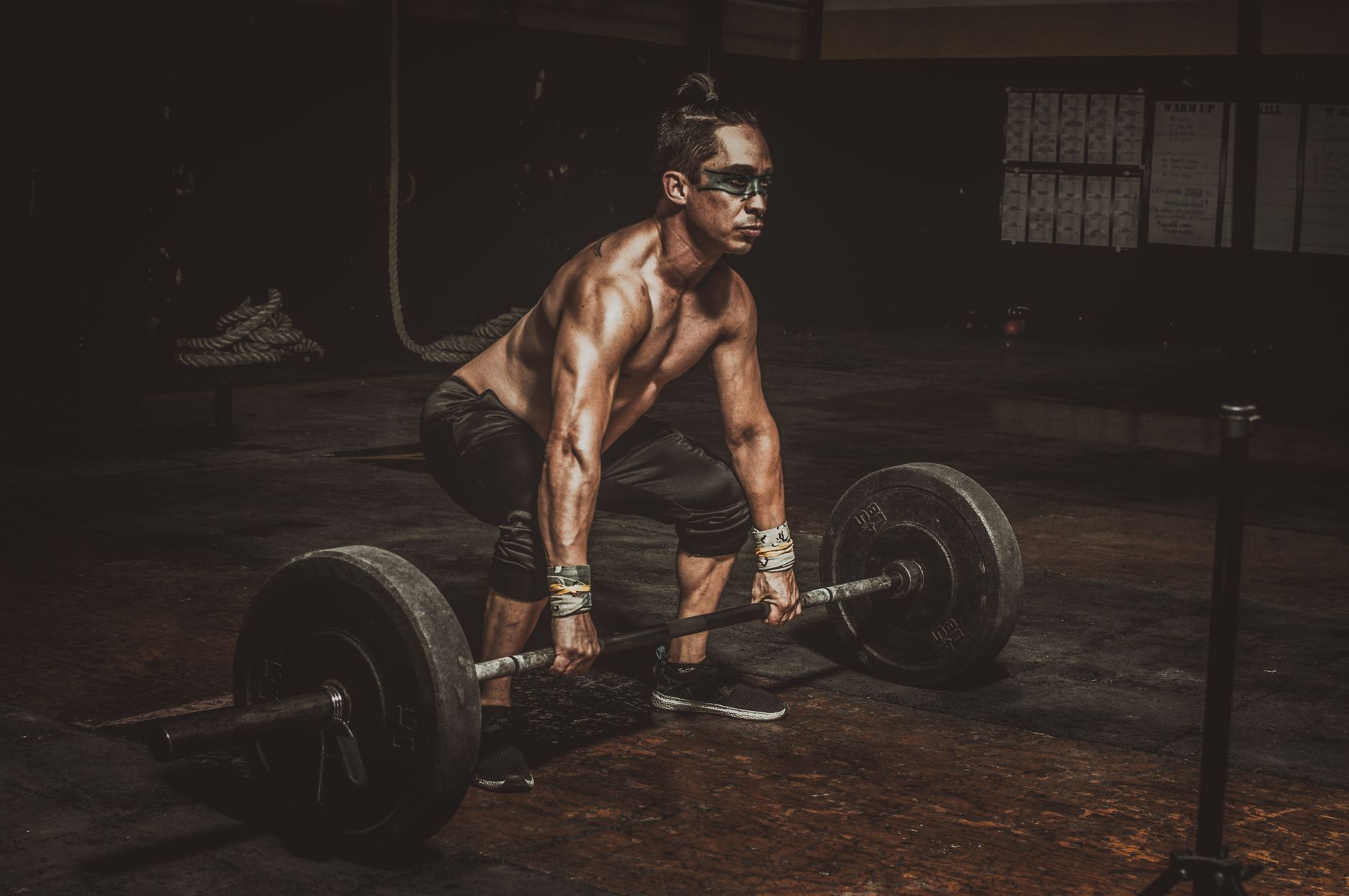
To truly understand what muscles the deadlift works, you need to break down the movement itself. Each phase demands specific muscle activation. Pay attention. This is where most lifters screw up.
The Setup: Building the Foundation
This is where the lift begins, long before the bar leaves the floor. A sloppy setup means a sloppy lift.
- Stance: Feet roughly hip-width apart, shins about an inch from the bar. Your mid-foot should be directly under the bar. This positions you to drive through your heels.
- Grip: Overhand, slightly wider than your shins. We prefer a double overhand grip for warm-ups to build grip strength, switching to mixed grip or using Lifting Straps for maximal efforts when grip becomes the limiting factor. Don’t let your grip hold back your pulls.
- Hips and Chest: Bend at your knees and hips to grab the bar. Your hips should be lower than your shoulders, but not “ass to grass.” Your chest should be up, proud. Flatten your lower back by arching slightly.
- Lats Engagement: This is crucial. Before you pull, imagine trying to bend the bar around your shins. This external rotation cues your lats to fire, pulling your shoulders down and back, effectively “packing” your shoulder blades. This creates a rigid upper back, protecting your spine and keeping the bar path tight.
- Core Bracing: Take a deep breath into your belly, not your chest. Brace your abs as if preparing for a punch. A good Weightlifting Belt can help you learn to brace effectively, but it’s not a substitute for developing strong internal bracing.
Muscles Activated in Setup:
- Lats: For upper back rigidity and pulling the bar close.
- Core (Abs, Obliques, Transverse Abdominis): For spinal stability and bracing.
- Hamstrings & Glutes: Under tension, pre-loaded for the pull.
- Erector Spinae: Actively working to maintain a neutral or slightly arched lumbar spine.
The Pull: Driving from the Floor
This is where the magic happens. You’re not “lifting” the weight; you’re driving the floor away with your legs.
- Leg Drive: Initiate the pull by pushing through your heels, driving your quads and glutes to extend your knees and hips simultaneously. The bar should move straight up.
- Bar Path: Keep the bar as close to your body as possible. It should scrape your shins and thighs. The lats you engaged in the setup are working overtime here to keep that bar tight.
- Back Position: Your back angle should remain consistent with your setup until the bar clears your knees. Don’t let your hips shoot up prematurely, turning it into a stiff-legged deadlift. Your erector spinae are under immense isometric tension, preventing your back from rounding.
- Upper Back: Your traps and rhomboids are firing hard to keep your shoulders pulled back and down, preventing them from rounding forward under the load. Your forearms and grip muscles are fighting for their lives to maintain hold of the bar.
Muscles Activated in The Pull:
- Quads: Primary movers for knee extension off the floor.
- Glutes: Powerful hip extensors, driving the hips forward.
- Hamstrings: Assist with hip extension, working synergistically with glutes.
- Erector Spinae: Isometric contraction to maintain spinal rigidity.
- Lats: Keep the bar close to the body, prevent rounding.
- Traps & Rhomboids: Upper back stabilization.
- Forearms & Grip: Isometrically holding the bar.
The Lockout: Standing Tall
This is the finish line, but it’s often butchered. No half-reps.
- Hip Extension: Once the bar clears your knees, continue driving your hips forward, squeezing your glutes hard.
- Standing Tall: Finish by standing completely upright, shoulders back, chest proud. Don’t hyperextend your lower back by leaning back excessively. This is not a strongman pose.
- Traps: Your traps will engage strongly at the top, assisting with shoulder elevation and retraction, creating that powerful, “yoked” look.
Muscles Activated in The Lockout:
- Glutes: Final powerful hip extension.
- Hamstrings: Continue to assist hip extension.
- Erector Spinae: Still active, maintaining upright posture.
- Traps: Strongly engaged for shoulder elevation/retraction.
The Descent: Controlled Negatives
You didn’t just pick up the weight. You own it on the way down too. Don’t just drop it, unless you’re competing in powerlifting and just finished a max effort. For hypertrophy and strength, control the negative.
- Reverse Motion: Hinge at the hips first, pushing your glutes and hamstrings back. Once the bar passes your knees, bend your knees to lower it to the floor.
- Maintain Control: The same muscles that lifted the weight are now working eccentrically to control its descent. Keep your back straight, lats tight, and core braced.
Muscles Activated in The Descent:
- Glutes & Hamstrings: Control hip flexion.
- Quads: Control knee flexion.
- Erector Spinae, Lats, Core: Maintain spinal and upper back rigidity.
Integrating the Deadlift into Your Training
This isn’t just theory. This is how you put the work in.
| Exercise | Sets | Reps | Rest (min) | Focus |
|---|---|---|---|---|
| Deadlift | 3-5 | 1-5 | 2-4 | Strength |
| Deadlift | 3-4 | 6-8 | 1.5-2 | Hypertrophy |
For strength work, we focus on lower reps and longer rest periods to maximize recovery and power output. For hypertrophy, slightly higher reps and shorter rests drive more metabolic stress. Either way, every rep must be clean. No compromises.
Progression: How to Keep Adding Plates
If you’re serious about adding plates to the bar, you need a plan. “Just lift more” is a fool’s strategy that leads to stagnation and injury.
- Linear Progression (Beginner/Intermediate): This is your bread and butter. Add 5-10 lbs to the bar each week, or every other week, as long as you can maintain perfect form. When you stall, deload slightly and try again, or switch to a different progression model. This works until it doesn’t.
- Double Progression (Intermediate): When you hit a plateau, focus on hitting the top end of your rep range (e.g., 8 reps for hypertrophy). Once you hit that, then add weight and drop back to the lower end of the rep range (e.g., 6 reps). Repeat.
- Intensity and Volume Manipulation (Advanced): This involves more complex periodization, varying sets, reps, and intensity over longer cycles. This is beyond the scope of a basic muscle activation guide, but understand that consistent, calculated increases in load or volume are non-negotiable for continued progress.
- Form First, Always: Never sacrifice form for weight. If your form breaks down, the weight is too heavy. Drop the ego, drop the weight, and rebuild. You’ll get stronger faster this way.
What Common Mistakes Are Killing Your Deadlift Progress?
Related reading: Beginner Workout Plan: 3-Day Full-Body Program with 8-Week Progression
We’ve seen it all. Don’t be “that guy.” These mistakes aren’t just inefficient; they’re dangerous.
- Rounded Back: This is the cardinal sin. It puts immense, uneven stress on your spinal discs. Your erector spinae aren’t bracing hard enough, or the weight is simply too heavy. Keep your chest up, lats tight, and back straight or slightly arched. A rounded back is a one-way ticket to a slipped disc and months out of the gym. It’s not worth it for a few extra pounds.
- Hips Shooting Up Too Fast: This turns the deadlift into a stiff-legged deadlift, putting excessive strain on your lower back. Your quads aren’t driving the initial pull. You’re trying to lift with your back and hamstrings only. Focus on driving your feet through the floor and extending your knees and hips simultaneously.
- Bar Drifting Away: If the bar isn’t scraping your shins and thighs, you’re losing leverage. This increases the moment arm, making the lift harder and putting more stress on your lower back. Your lats aren’t engaged. Pull that bar into your body as if you’re trying to bend it.
- Ego Lifting: The most common killer of gains and bodies. This is when you load up more weight than you can handle with good form. You compensate with bad technique, risk injury, and activate fewer target muscles effectively. Nobody cares what you deadlift if it looks like a seizure. Check your ego at the door.
- Bouncing the Weight: Some lifters drop the bar and immediately bounce it off the floor for the next rep. This is not a deadlift. This is a partial rebound lift. You negate the hardest part of the lift (breaking inertia from a dead stop) and significantly reduce the muscle activation, especially in the hamstrings and glutes. Every rep starts from a dead stop. That’s why it’s called a deadlift.
- Hyperextending at Lockout: Leaning back excessively at the top of the lift puts unnecessary stress on your lumbar spine. Your glutes should finish the movement by driving your hips forward to a neutral, upright position. Don’t arch your back like you’re doing a limbo dance.
- Not Bracing the Core: A weak or unbraced core means a wobbly, unstable spine. Your abs and obliques need to be rock solid. Learn to brace hard, even without a belt. It’s fundamental to protecting your spine and transferring force efficiently.
Gear We Use
We’re not here to sell you a gym full of gadgets. But some tools are essential when the weights get serious.
- Weightlifting Belt: For maximal efforts, a good belt isn’t a crutch; it’s a tool for increasing intra-abdominal pressure. This helps brace your core and stabilize your spine under heavy loads. It allows you to lift heavier, safer. Look for a solid, thick leather belt. We use a Weightlifting Belt for anything over 80% 1RM.
- Lifting Straps: When your grip is the weakest link, straps allow you to continue working the target muscles—your back, glutes, and hamstrings—without your forearms giving out prematurely. Don’t use them for every set, but for your heaviest working sets, they’re invaluable. You want to train your main movers, not just your hands. We recommend simple, heavy-duty Lifting Straps.
Not sure where your max actually sits? Our 1 rep max calculator runs all seven published formulas on the same set and shows you how far apart they land, so you can see how much to trust the number before you program around it.
FAQ
Q1: Does the deadlift work abs? A1: Absolutely. Your abs and obliques work incredibly hard isometrically to brace your core and stabilize your spine throughout the entire lift. They prevent your torso from rounding or twisting, making the deadlift a phenomenal core builder, even if it’s not a direct abdominal exercise.
Q2: Is deadlifting once a week enough? A2: For most lifters, especially those moving heavy weight, once a week is often sufficient. The deadlift is incredibly taxing on the central nervous system and takes significant recovery. Beginners might benefit from slightly more frequency with lighter loads, but for serious strength gains, a single high-intensity session per week is a common and effective approach.
Q3: Should I deadlift if my back hurts? A3: No. If your back hurts, especially your lower back, you need to stop deadlifting immediately. Continuing to lift with pain is a recipe for serious injury. Consult a professional to diagnose the issue, address any underlying weaknesses, and only return to deadlifts once cleared and pain-free, focusing on impeccable form.
Q4: What’s the difference between conventional and sumo deadlifts for muscle activation? A4: Conventional deadlifts emphasize the erector spinae, hamstrings, and glutes more due to a greater forward lean and range of motion. Sumo deadlifts, with a wider stance and more upright torso, shift more emphasis to the quads and adductors, while still heavily engaging the glutes and core. Both are powerful lifts, but they distribute the load differently.
Q5: Can deadlifts build big arms? A5: While deadlifts don’t directly target the biceps or triceps for growth, they significantly strengthen your forearms and grip muscles. Your biceps work isometrically to prevent your arms from extending, but not enough for significant size. For big arms, you still need direct arm work. Deadlifts build overall power, not necessarily specific arm mass.
Conclusion
The deadlift is a beast. It’s brutal, it’s demanding, and it’s unforgiving of bad form. But when you master it, when you understand exactly what muscles the deadlift works and how to engage them properly, it becomes the most powerful tool in your arsenal for building a truly strong, dense, and functional physique. This isn’t just about moving weight; it’s about moving it with purpose, precision, and relentless effort.
Stop screwing around with half-reps and sloppy form. Commit to the technique. Understand the muscle activation. Use the right gear when the time comes. The gains are waiting. Go put in the damn work.
Related Articles
- How Much Protein Do You Actually Need Per Day to Build Muscle for Serious Lifters 2026
- Bulking vs Cutting for Serious Lifters: How to Do Both Right and When to Switch in 2026
- How to Build a Push Day Workout for Serious Lifters: Exercises, Sets, & Reps (2026)
- HIIT vs Steady State Cardio: Which Burns More Fat and When to Use Each
Where to Buy


💬 Join the Conversation
Have thoughts on this article? We'd love to hear from you.