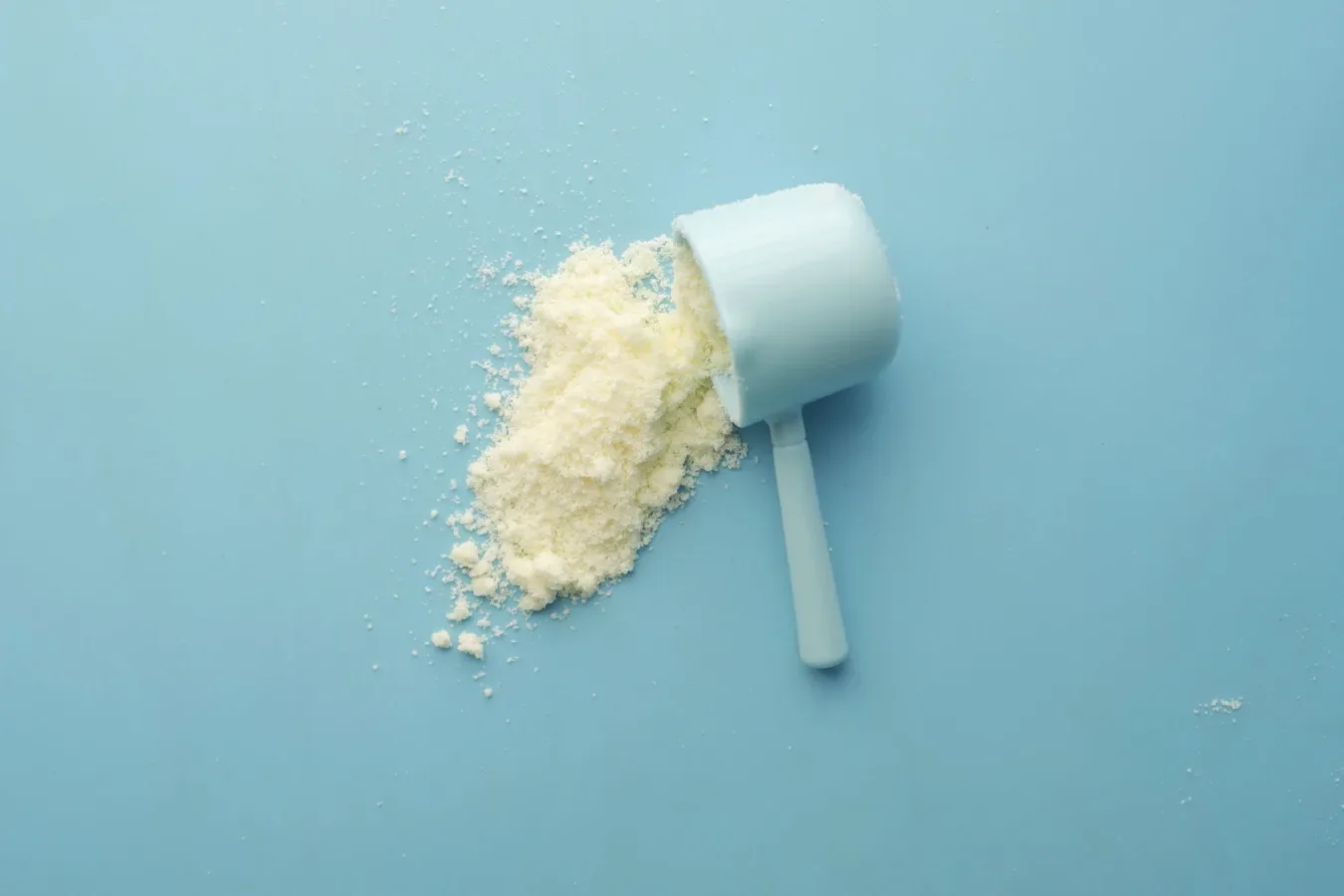
No study has shown that creatine causes hair loss. The best direct evidence, a 2025 randomized trial, found no difference between creatine and placebo in hair measures or DHT after 12 weeks.
That trial was small and short, so it does not settle every question. But the fear itself rests on very little.
Where the Fear Came From
The worry traces back to a 2009 study of college rugby players. Those taking creatine had higher levels of DHT, a hormone linked to male pattern baldness.
Two things are usually left out when this gets repeated:
- The study measured a hormone in the blood. It never measured hair.
- It lasted three weeks, and no player reported hair loss.
So the claim was always a theory: creatine raises DHT, DHT is linked to hair loss, therefore creatine causes hair loss. Nobody had tested the last step.
What the 2025 Trial Found
In 2025, researchers published the first trial built to test this directly, in the Journal of the International Society of Sports Nutrition.
| Detail | What they did |
|---|---|
| Who | 45 resistance-trained men aged 18 to 40; 38 finished |
| Groups | 5 g of creatine monohydrate a day, or a placebo |
| Length | 12 weeks |
| Blood tests | Total testosterone, free testosterone and DHT |
| Hair tests | Hair density, follicle count and hair thickness |
The result: no meaningful difference between the groups in any hormone or hair measure.
What This Trial Cannot Tell You
Be honest about the limits:
- It was small. Only 38 men finished.
- It was short. Twelve weeks is not long in the life of a hair follicle.
- It tested healthy young men. It does not tell us about women or older adults.
- Family history was not the focus. We found no long-term trial following men with a strong family history of baldness.
Critics have also pointed out that it measured DHT in the blood, not at the scalp.
What About Your Testosterone?
A 2021 review of common creatine questions looked at this too. It concluded that the research does not support the idea that creatine causes hair loss or baldness, and that most studies show no meaningful change in testosterone.
What Should You Do?
For most lifters, the evidence does not give a reason to avoid creatine.
- Stick to the normal dose. The trial used 5 g a day, a standard amount.
- Do not blame creatine too quickly. Male pattern baldness is largely genetic, and it often starts in the same years people start lifting.
- See a doctor or dermatologist if you notice your hair thinning. Treatment works better when it starts early.
If you are already worried because baldness runs in your family, that is a fair thing to raise with your doctor. This article is general information, not medical advice.
If you want a simple starting point, plain creatine monohydrate is the form used in this trial. Our creatine guide for beginners covers the basics, and we compare forms in creatine monohydrate vs HCL.
Sources
- Lak et al. 2025, Journal of the International Society of Sports Nutrition
- Antonio et al. 2021, Common questions and misconceptions about creatine
- American Hair Loss Association: critique of the 2025 study