
When you purchase through links on our site, we may earn an affiliate commission. How it works.
- Prioritize compound lifts.
- Focus on maintaining rep ranges.
- Accept smaller increments of progress.
The question of progressive overload on a cut pops up constantly. It’s a fair question. You’re in a caloric deficit. Your body’s starving for energy. How the hell are you supposed to get stronger? The common wisdom is that strength gains stop cold turkey when you start cutting. Many lifters just accept this. They see their lifts stall, then drop. They chalk it up to the cut. They halve their protein, throw in the towel, and wonder why they look stringy and weak. This is bro-science at its finest. It’s an excuse for not putting in the damn work. We’ve been there. We’ve figured out how to keep the iron moving forward, even when the scale is moving down.
Why It Works
The fundamental principle of progressive overload stays the same, whether you’re bulking or cutting: you must consistently challenge your muscles to do more than they’re used to. On a bulk, this usually means adding weight. On a cut, it’s more nuanced. Your body’s in a catabolic state. It’s breaking down tissue. Muscle protein synthesis, the process of building muscle, is significantly hindered by a caloric deficit. This is why drastic strength gains are unlikely. However, the goal on a cut isn’t necessarily to set new personal bests every week. It’s about maintaining the muscle you have. It’s about finding ways to still stimulate it. This means focusing on neuromuscular efficiency – becoming better at recruiting the muscle fibers you already have. You can still improve your form. You can increase time under tension. You can reduce rest periods. You can even add a single rep to a set. These are all forms of progressive overload. They signal to your body that your muscles are still needed. This prevents them from being sacrificed for energy. It’s about being smarter with your training stimulus, not just heavier weights.
The Program / The Technique
Related reading: 4-Day Upper Lower Split: The Complete Workout Plan for Strength & Size
This isn’t about magic exercises. It’s about intelligent application of known principles. We’re sticking to the basics. These are the movements that give you the most bang for your buck. This program focuses on compound lifts. They recruit the most muscle mass. They allow for the greatest potential to maintain or even slightly increase load. Rep ranges are kept moderate to high. This emphasizes muscle endurance and metabolic stress. That can aid in fat oxidation.
| Exercise | Sets | Reps | Rest (or Tempo) |
|---|---|---|---|
| Barbell Squat | 3 | 6-8 | 90-120 seconds |
| Romanian Deadlift | 3 | 8-10 | 90 seconds |
| Bench Press | 3 | 6-8 | 90-120 seconds |
| Barbell Row | 3 | 8-10 | 90 seconds |
| Overhead Press | 3 | 8-10 | 90 seconds |
| Pull-ups (or Lat Pulldown) | 3 | AMRAP* | 90 seconds |
| Bicep Curls | 2 | 10-12 | 60 seconds |
| Triceps Pushdowns | 2 | 10-12 | 60 seconds |
*AMRAP: As Many Reps As Possible.
We’re not talking about dancing around the weight here. Each rep needs to be controlled. For squats and bench press, we recommend a tempo of 2-0-1-0. That’s a two-second eccentric (lowering phase). No pause at the bottom. A one-second concentric (lifting phase). No pause at the top. This controlled descent increases time under tension. It makes the weight feel heavier. It forces more muscle fiber recruitment. For other exercises, focus on a controlled eccentric and a powerful, but not jerky, concentric. If you’re doing RDLs and the weight is flying up, you’re not doing them right. You should feel a stretch in your hamstrings at the bottom. If you’re struggling to maintain this tempo, the weight is too heavy for the prescribed rep range. Stop ego lifting.
The goal here isn’t to break records. It’s to keep the stimulus high enough to tell your body, “Hey, we still need this muscle.” When you can hit the top end of the rep range for all sets with good form and controlled tempo, then you can consider adding a small increment of weight or attempting an extra rep on one of the sets next week. This is progressive overload on a cut in its purest, most pragmatic form. It’s about consistent, incremental improvements, not massive leaps.
Progression
Progression on a cut is different. Forget adding 10 pounds every week. That’s a recipe for failure and injury when you’re in a deficit. We’re talking about micro-progressions.
Here’s how it works:
- The Target: Let’s say your target for squats is 3 sets of 6-8 reps. You hit 3 sets of 6 reps last week with good form and tempo.
- The Goal: This week, aim for 3 sets of 7 reps.
- The Win: If you achieve 3 sets of 7 reps, you’ve successfully progressed.
- The Next Step: Next week, aim for 3 sets of 8 reps.
- The Plateau Breaker: Once you hit 3 sets of 8 reps for all sets, then you can consider adding a small amount of weight (e.g., 2.5-5 lbs) and dropping back to 3 sets of 6 reps with that new weight, starting the cycle over.
This applies to all exercises. For AMRAP sets like pull-ups, aim to add one rep to your total number of reps from the previous week. If you did 10 reps last week, aim for 11 this week.
Sometimes, progression might not be about adding weight or reps. It could be about reducing rest times between sets. If you hit your target reps and sets, try cutting your rest by 10-15 seconds the following week. This increases the metabolic demand. It can contribute to fat loss and muscle maintenance. Another option is to improve your form. Focusing on a deeper squat, a fuller range of motion on your rows, or a stricter lockout on your bench press is also a form of progression. It means you’re becoming more efficient and stronger within the movement itself.
Don’t get discouraged if progress is slow. You’re fighting against a calorie deficit. Any forward movement is a win. This is the hard truth of progressive overload on a cut. It requires patience and consistency. Forget the ego lifting you might have done on a bulk. This is about precision and strategy.
Form Cues & Common Mistakes
Related reading: Beginner Workout Plan: 3-Day Full-Body Program with 8-Week Progression
Let’s talk about what matters. Good form prevents injury. It ensures you’re actually working the target muscles, not just moving weight.
Squats:
- Cue: Drive your knees out as you descend. Imagine spreading the floor. Keep your chest up and your back tight.
- Mistake: Letting your knees cave in (valgus collapse). This puts excessive stress on your knee joints. It reduces quad engagement. Also, rounding your lower back at the bottom. Your spine should remain neutral.
Romanian Deadlifts (RDLs):
- Cue: Hinge at your hips, not your waist. Keep a slight bend in your knees. Let the bar travel down your thighs. Feel a stretch in your hamstrings. Squeeze your glutes to come back up.
- Mistake: Bending your knees too much, turning it into a conventional deadlift. Rounding your upper back and trying to lift with your arms.
Bench Press:
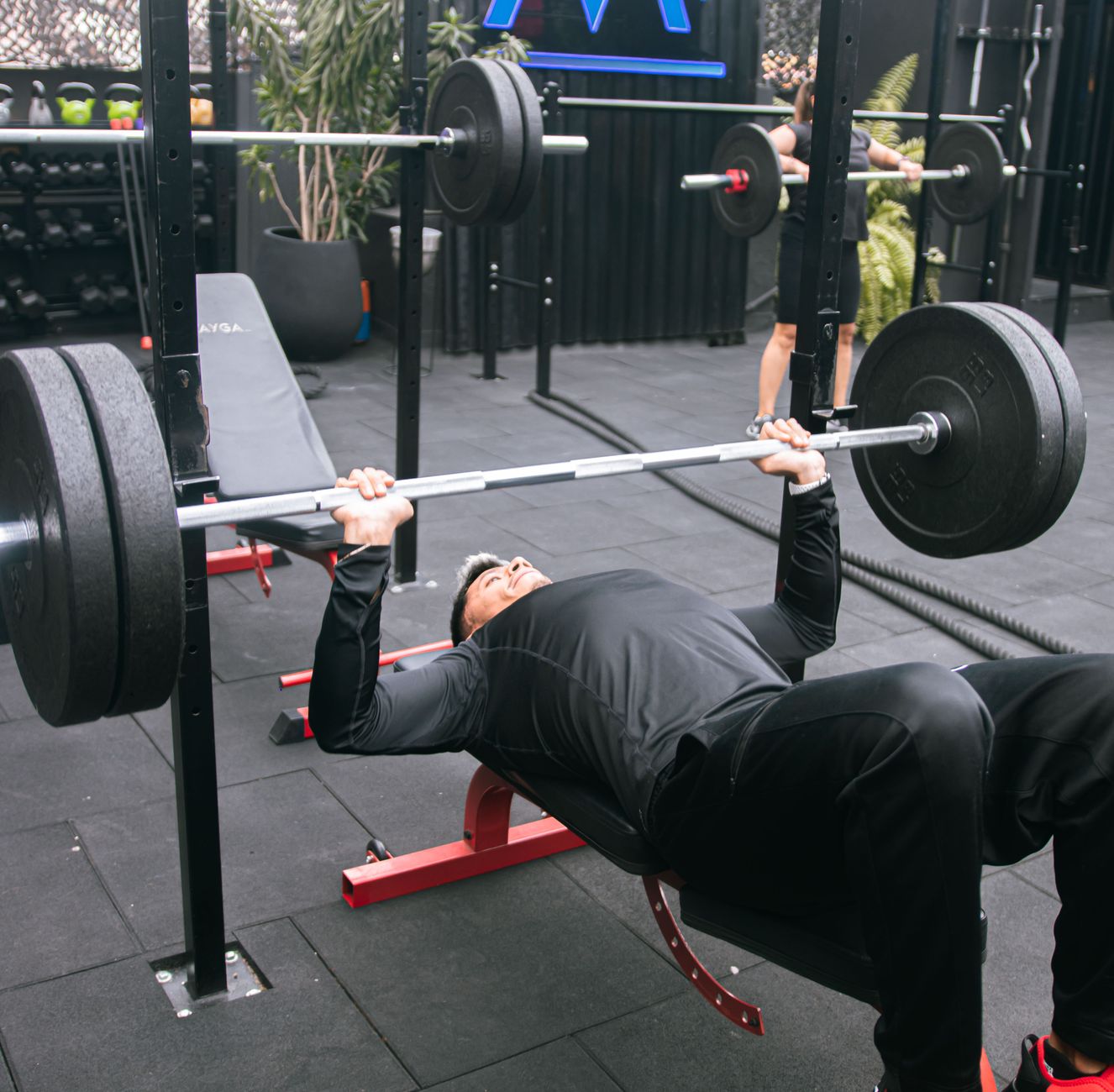
- Cue: Retract and depress your shoulder blades. Create a slight arch in your lower back, keeping your glutes on the bench. Drive your feet into the floor. Lower the bar under control to your lower chest or upper abs.
- Mistake: Flaring your elbows too wide, which stresses your shoulders. Lifting your glutes off the bench during the press. Using too much momentum from the bounce.
Barbell Rows:
- Cue: Maintain a neutral spine. Pull the bar towards your lower chest or upper abdomen. Squeeze your shoulder blades together at the top. Control the eccentric.
- Mistake: Jerking the weight with your back. Using too much leg drive. Not getting a full contraction at the top.
Overhead Press:
- Cue: Keep your core tight and glutes squeezed. Press the bar straight up. Move your head slightly back as it passes your face. Lock out at the top.
- Mistake: Leaning back too far, turning it into an incline press. Not locking out your elbows.
Pull-ups/Lat Pulldowns:
- Cue: Initiate the movement by pulling your shoulder blades down and back. Drive your elbows towards your hips.
- Mistake: Shrugging your shoulders. Using momentum to swing yourself up.
The biggest mistake we see across the board, especially during a cut, is half-repping. If you’re not going through a full range of motion, you’re cheating yourself. You’re not stimulating the muscle effectively. You’re setting yourself up for imbalances. Stop half-repping and read this. Another common error is ignoring recovery. You’re in a deficit. Your body needs fuel and rest. Don’t skip sleep and expect to recover.
Gear I Use
When pushing for those last few reps, especially on deadlifts, a good pair of straps can make a difference. They take grip fatigue out of the equation. They allow you to focus on the pull. For heavy squats, a solid weightlifting belt can help you brace harder. It stabilizes your core. It allows you to push a little more weight or reps with better form. Use these tools strategically, not as a crutch.
FAQ
What’s the most important factor for progressive overload on a cut? Consistency. Even small increments of progress week-to-week are vital. You need to show up and put in the work, even when you don’t feel 100%.
How much weight can I expect to add during a cut? Expect minimal weight additions, if any. Focus on adding reps, improving form, or reducing rest times. Significant weight increases are rare and often unsustainable on a deficit.
Should I change my rep ranges when cutting? Not drastically. Moderate rep ranges (6-12) are still effective for muscle maintenance and strength. Very high reps might feel good for a pump but aren’t optimal for strength preservation.
What if I can’t add weight or reps for a few weeks? This is normal. Focus on improving your form, increasing time under tension through tempo, or reducing rest periods. The goal is to maintain stimulus, not necessarily to always increase load.
Is it okay to deload more frequently when cutting? Yes, it can be beneficial. If you’re feeling excessively fatigued, mentally drained, or your strength is significantly dropping, a deload week can help you recover and come back stronger for the next training block.
Conclusion
Progressive overload on a cut isn’t a myth. It requires a shift in mindset from aggressive weight accumulation to strategic stimulus maintenance. You’re not going to add 20 pounds to your bench press every month like you might on a bulk. That’s the fantasy sold by charlatans. The reality is that progress will be slower, more methodical. It means focusing on the small victories: an extra rep, a slightly cleaner lockout, a shorter rest. If you’re serious about adding plates to your bar in the long run, you can’t afford to let your strength vanish when you decide to shed some fat. Stop making excuses. Today, commit to one small improvement in your next training session. Focus on that tempo, that extra rep, that controlled eccentric. Your future self will thank you.
Related Articles
- How Much Protein Do You Actually Need Per Day to Build Muscle for Serious Lifters 2026
- Bulking vs Cutting for Serious Lifters: How to Do Both Right and When to Switch in 2026
- How to Build a Push Day Workout for Serious Lifters: Exercises, Sets, & Reps (2026)
- HIIT vs Steady State Cardio: Which Burns More Fat and When to Use Each
Where to Buy


💬 Join the Conversation
Have thoughts on this article? We'd love to hear from you.