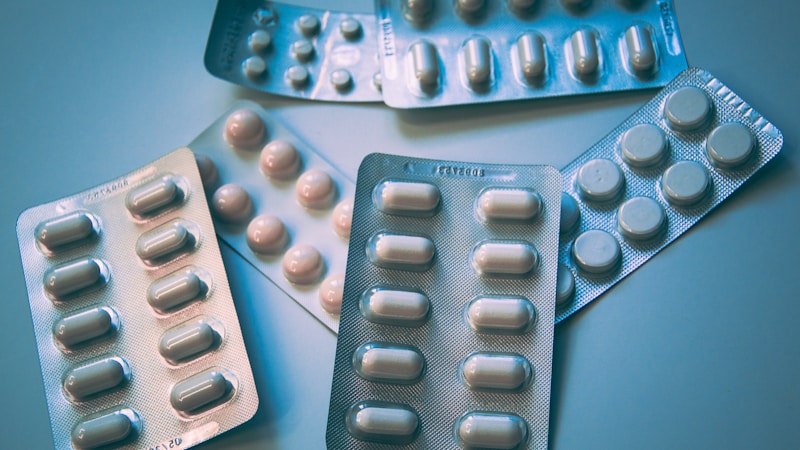
 Photo: Unsplash
 When you purchase through links on our site, we may earn an affiliate commission. How it works.
The creatine monohydrate vs HCL debate has run for over a decade. Supplement brands charge a premium for HCL, claiming better absorption and fewer side effects. Does the science back that up?
What Creatine Does
Creatine is a naturally occurring compound produced in your liver and kidneys. About 95% of your body’s creatine is stored in skeletal muscle as phosphocreatine, used to regenerate ATP during high-intensity efforts — lifting, sprinting, jumping.
Supplementing increases phosphocreatine stores by 10–40%, directly improving short-burst performance. Over 1,000 studies confirm the effect. It is one of the most researched supplements in sports science.
Creatine Monohydrate: The Gold Standard
Creatine monohydrate is creatine bound to a water molecule — about 88% pure creatine by weight. Every major long-term creatine study has used this form.
Standard dosing: 5g per day. Loading (20g/day for 5 days) saturates stores faster but is not required.
US price: $15–$25/month. Optimum Nutrition Micronized Creatine is $27 for 120 servings at Amazon, Walmart, and GNC.
Side effects: Mild bloating in some users during loading. Rare at maintenance dosing. Take with food to minimize.
Creatine HCL: The Premium Alternative
Creatine hydrochloride binds creatine to hydrochloric acid, increasing water solubility roughly 40x compared to monohydrate.
The marketing argument: better solubility equals better absorption equals smaller effective dose.
Standard dosing: 1.5–2g per day.
US price: $30–$50/month. Con-Cret HCL runs $35 for 60 servings at Amazon and GNC.
Side effects: Marketed as fewer GI issues — but few direct comparison studies confirm this at equivalent creatine doses.
What the Research Actually Shows
Solubility does not equal bioavailability. Creatine monohydrate is already very well absorbed — multiple studies show near-complete uptake when taken correctly.
A 2022 review in the Journal of the International Society of Sports Nutrition found no significant performance difference between monohydrate and HCL at equivalent creatine doses.
The bloating complaint with monohydrate is primarily a loading-phase issue. Skip loading, take 5g daily — most users report no GI issues.
Scientific consensus: Monohydrate remains the evidence-backed choice. HCL has fewer studies, higher cost, and no proven advantage.
Head-to-Head
| Factor | Monohydrate | HCL |
|---|---|---|
| Daily dose | 5g | 1.5–2g |
| Monthly cost | ~$15 | ~$35 |
| Research studies | 1,000+ | ~50 |
| Solubility | Moderate | Very high |
| Bloating risk | Low (no load) | Very low |
| Performance | Strong evidence | Comparable, less studied |
When HCL Makes Sense
- You have a sensitive stomach and monohydrate causes consistent GI issues at 3–5g
- You prefer smaller capsule doses for travel
- Cost is genuinely not a concern
Verdict
Buy creatine monohydrate. The $20/month savings is real, and the science overwhelmingly supports it. Skip the loading phase, take 5g daily with a meal, and results will match anything HCL delivers at one-third the price.
Top US picks:
- Optimum Nutrition Micronized Creatine — $27/120 servings at Amazon, Walmart, GNC
- Thorne Creatine — $43/90 servings, third-party tested, at Amazon and Thorne.com
- Bulk Supplements Creatine Monohydrate — best price per gram, $20/500g on Amazon

💬 Join the Conversation
Have thoughts on this article? We'd love to hear from you.