When you purchase through links on our site, we may earn an affiliate commission. How it works.
QUICK ANSWER: THE RDL ESSENTIALS
- The Hinge: Lock your knees in a soft angle (15-20 degrees) and push your hips straight back toward the wall behind you.
- The Range: Lower the barbell only as far as your hips can travel backward. For most lifters, that means stopping between mid-shin and just below the knee.
- The Target: Program 3 to 4 sets of 6 to 10 reps with a controlled 3-second negative to maximize loaded stretch and mechanical tension.
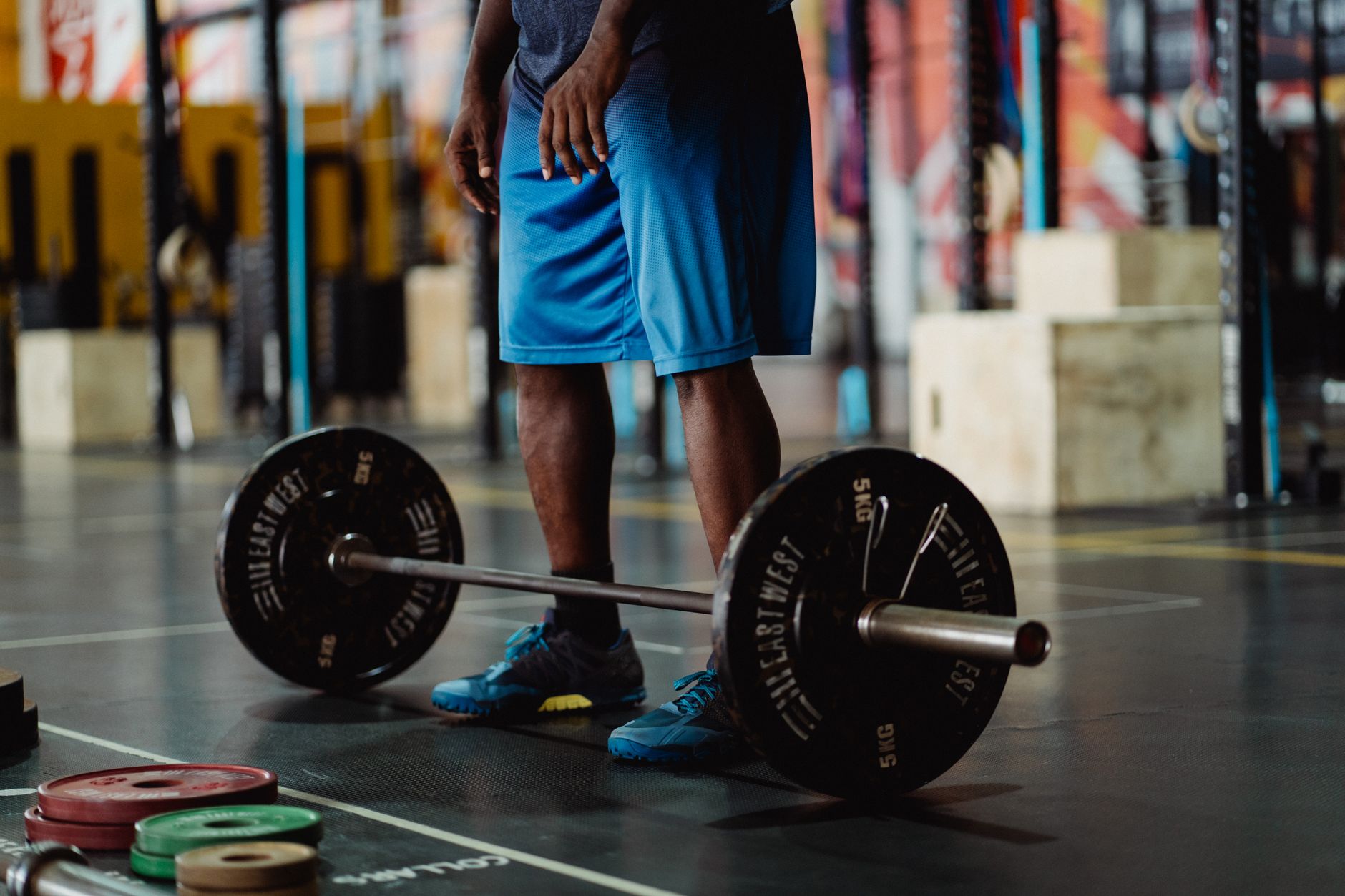
Mastering solid romanian deadlift form is the single fastest way to pack thick, dense hamstrings onto your frame while hardening your entire posterior chain. In our experience under the iron, most guys in the gym ruin this lift because they can’t differentiate between a hip hinge and a back bend. They dump three plates on a barbell, bounce off their toes, round their lumbar spines, and complain about lower back pain two days later. That’s plain stupid, ego-driven training. The Romanian Deadlift (RDL) isn’t a circus trick to see how much weight you can move four inches. It’s an isolation tool for your posterior chain that demands precision, deep mechanical tension, and absolute control over the eccentric phase.
When we stopped treats-for-everybody leg training and focused strictly on heavy, full-range hinging, our leg thickness changed radically. Your quads might dominate the front of your legs, but without hamstrings that hang like beef hanging in a butcher shop, your legs will look flat from the side. You don’t need magic supplements, high-frequency gimmicks, or complicated machinery. You need a loaded barbell, proper execution, and the discipline to leave your pride at the gym door. Let’s break down the mechanics so you can start growing.
Why Is the Romanian Deadlift Superior for Hamstring Mass?
If you want massive hamstrings, you have to understand basic muscular tension. Bro-science will tell you that heavy back squats are all you need for complete leg development. That’s total nonsense. Squats are an outstanding quad builder, but because the hamstring crosses both the hip and knee joints, it remains at a relatively constant length during a squat. The hamstring contracts at the hip while lengthening at the knee, resulting in minimal net dynamic tension.
To stretch and load the hamstring under maximum mechanical tension, you must lock the knee in a slightly flexed position and forcibly extend the hip joint under load. That’s precisely what an RDL forces you to do.
CONVENTIONAL DEADLIFT vs. ROMANIAN DEADLIFT
Conventional Deadlift: [Bar on Floor] ---> [Quad/Glute Push] ---> [Concentric Lockout] (Focus: Max weight moved from floor to hip)
Romanian Deadlift: [Top Lockout] ---> [Controlled Hinge/Eccentric Stretch] ---> [Mid-Shin Pause] ---> [Glute/Ham Driver] (Focus: Maximum loaded stretch on hamstrings) Unlike conventional deadlifts—where you pull dead weight off the floor using leg drive, back extension, and momentum—the RDL starts from the top position. You lower the load eccentrically while pushing your pelvis back. This creates a terrifying amount of stretch-mediated hypertrophy. Reps 6 through 8 on a properly executed RDL set should feel like your hamstring tendons are being pulled like heavy rubber bands. That deep loaded stretch is where muscle growth lives.
How Do You Execute Perfect RDL Technique for Hamstrings?
Related reading: Best Omega-3 Fish Oil 2026: Top 5 for Inflammation and Recovery
Getting your rdl technique for hamstrings right requires treating every single rep like a single-rep maximum effort in precision. You don’t just grab the bar and start bending over.
Here is the exact setup, execution, and rep scheme we run in our upper/lower split rotation.
| Exercise | Sets | Reps | Tempo | Rest |
|---|---|---|---|---|
| Barbell Romanian Deadlift | 3 - 4 | 6 - 8 | 3-1-1-0 | 120 - 180 sec |
| Dumbbell RDL (Accentuated Stretch) | 3 | 10 - 12 | 2-1-1-0 | 90 sec |
| Single-Leg B-Stance RDL | 2 - 3 | 10 - 12 (per side) | 2-0-1-0 | 60 sec |
Step 1: The Setup and Unrack
Set a barbell in a power rack at roughly mid-thigh height. Step up to the bar, grip it just outside your legs using a double-overhand grip, lock your shoulders down into your back pockets, and take two steps backward. Stand with your feet shoulder-width apart, toes pointing straight ahead or flared out slightly (no more than 5 to 10 degrees).
Step 2: Setting the Knees
Before the bar moves an inch downward, soft-bend your knees. Unlock them so they have roughly a 15-degree bend. This knee angle stays frozen for the entire set. If you bend your knees more as you lower the weight, you’re turning the lift into a conventional squat/deadlift hybrid and taking tension off the hamstrings. If you lock your knees completely straight, you turn it into a stiff-legged deadlift and dump direct shear force straight into your lumbar spine. Keep them soft, fixed, and static.
Related reading: Bulking vs Cutting for Serious Lifters: How to Do Both Right and When to Switch in 2026
Step 3: The Hinge (The Eccentric)
Inhale deep into your stomach, brace your abs like you’re about to take a punch, and start driving your hips backward. Imagine someone tied a thick rope around your waist and is pulling your hips straight back toward the wall behind you. The barbell must maintain physical contact with your thighs, sliding down your legs as your hips travel back. If the bar drifts two inches away from your shins, you instantly shift the moment arm to your lower back and kill the hypertrophy stimulus in your legs.
Step 4: Finding the Bottom Endpoint
Lower the bar slowly over a 3-second count. Stop lowering the bar the exact millisecond your hips stop traveling backward. For guys with good mobility, this usually happens around mid-shin. For guys with tight hips, it might be right below the kneecap. Don’t reach for the floor with your hands or round your spine just to get the plates closer to the rubber mats. The floor doesn’t care about your stretch; your hamstrings do.
Step 5: The Turnaround and Lockout
Hold the bottom stretch for one full second. Drive your feet hard into the platform, contract your glutes and hamstrings, and push your hips forward to return to the starting position. Keep the bar scraped against your shins and thighs on the way up. Stop when you’re standing tall. Don’t lean back or hyperextend your lower back at the top—squeezing your lower back into extension doesn’t build glutes, it just compresses your spinal discs.
How Should You Program and Progress Heavy RDLs?
You can’t build massive legs by lifting the same 135 pounds for three years. However, you also can’t jump 20 pounds a week on RDLs without breaking your technique down into garbage. We advocate a strict Double Progression System for programming hamstring hinge work.
DOUBLE PROGRESSION MODEL (Target: 3 Sets x 6-8 Reps)
Week 1: 225 lbs x 6, 6, 6 (Baseline established) Week 2: 225 lbs x 7, 7, 6 (Adding reps) Week 3: 225 lbs x 8, 8, 8 (Target hit across all sets!) Week 4: 245 lbs x 6, 6, 6 (Weight increased, reps reset) Select a weight where you hit failure or sit 1-2 reps shy of failure (RIR 1-2) at 6 reps on your first set while using dead-stop, strict tempo. Keep that exact load until you can complete 3 sets of 8 clean reps with flawless execution. Only then do you add 5 to 10 pounds to the bar and drop back down to 6 reps.
In our experience, running this progression model once a week as your primary posterior chain builder will push your hamstring size through the roof while keeping your knees and lumbar spine feeling bulletproof.
What Are the Most Common Romanian Deadlift Mistakes?
We see lifters butcher their romanian deadlift form every single week in home gyms and commercial facilities alike. If you want to grow, you need to eliminate these ego-driven mistakes immediately.
1. Reaching for the Floor (Spinal Flexion)
The absolute worst mistake is thinking that the plates have to touch the floor on an RDL. They don’t. An RDL is a hip-hinge, not a ground-based pull. Once your hips reach their maximum backward threshold, any further downward movement of the bar comes directly from flexing your lumbar spine. You’re no longer loading the hamstrings; you’re loading your vertebral discs like a ham sandwich in a nutcracker. Stop when your hips stop.
2. Letting the Bar Drift Away
When the weight gets heavy, your lats want to give up. The bar drifts forward away from your body, creating a massive leverage arm against your lower back. You must flex your lats and physically drag the knurling of the bar up and down your thighs and shins. If you burn your shins up a little bit during a heavy set, good. That means the bar was where it belonged.
3. Turning It Into a Squat
If your butt drops down toward the floor during the movement, you’re flexing at the knees. This shifts the workload off the hamstrings and places it squarely onto your quadriceps. Your shin angles should stay nearly vertical throughout the entire range of motion. Think about keeping your shins static like concrete pillars while your pelvis glides over them.
4. Egolifting Heavy Weight with Bad Grip
Your hamstrings are a massive muscle group capable of moving big iron. Your hands, however, will give out far before your legs do when executing 3-second negatives with heavy loading. Sitting there struggling to hold onto a slick barbell completely ruins your mind-muscle connection with your hamstrings.
What Gear Do You Actually Need for Heavy RDLs?
We don’t believe in spending money on useless fitness paraphernalia. But when you’re pulling heavy working sets of RDLs after a primary strength movement, grip fatigue is a real problem that holds back growth.
If your grip gives out on rep 4 when your legs could easily handle 8 reps, your grip is directly holding back hamstring hypertrophy. Use a pair of basic heavy-duty lifting straps for your top working sets. Wrap them tight, take your grip out of the equation entirely, and focus 100% of your nervous system output on driving your hips and ripping into the stretch.
If you’re loading heavy weight near your absolute limit, a firm 4-inch leather weightlifting belt gives your abdominal wall something to press against during deep intra-abdominal bracing. Just don’t use the belt as a crutch to compensate for a weak core or rounded lower back.
Not sure where your max actually sits? Our 1 rep max calculator runs all seven published formulas on the same set and shows you how far apart they land, so you can see how much to trust the number before you program around it.
Frequently Asked Questions
What is the primary difference between a stiff-legged deadlift and a Romanian deadlift?
A Romanian deadlift starts from the top lockout, uses a soft knee bend (15 degrees), and stops as soon as the hips stop traveling backward. A stiff-legged deadlift typically starts from the floor or lower down, keeps the knees almost completely straight, and allows a natural degree of upper back rounding to pull weight from a deeper position.
How deep should I go during a Romanian deadlift?
You should go as deep as your hip mobility allows without your lower back rounding. For most lifters with proper hamstring flexibility, the depth cutoff is located right around the mid-shin level or right below the kneecaps.
Can I do Romanian deadlifts with dumbbells instead of a barbell?
Yes, dumbbell RDLs are an outstanding exercise because they allow your wrists to rotate naturally into a neutral position, which lets you keep the weight tucked closer to your center of gravity. They offer a slightly better loaded stretch at the bottom, though barbell RDLs allow for easier heavy weight progression over time.
Why do I feel Romanian deadlifts mostly in my lower back?
If you feel the lift primarily in your lower back, you’re either letting the bar drift away from your legs, rounding your lumbar spine at the bottom, or bending over at the waist instead of driving your hips backward. Lighten the load, lock your lats down, keep the bar scraping your shins, and limit your depth to where your hips actually move.
How often should I train Romanian deadlifts for maximum mass?
For optimal recovery and muscle growth, train the Romanian deadlift 1 to 2 times per week within an upper/lower or push/pull/legs split. Keep total weekly volume between 6 to 10 heavy, quality working sets taken close to technical failure.
Pack On Real Muscle Mass Today
Stop half-repping your leg days, dumping heavy iron onto your lower back, and relying on machine curl variations to build serious leg volume. The hard truth is that building monster hamstrings requires real, unglamorous, heavy work under the barbell. Master your romanian deadlift form, control the negative, lock your knees in place, and push your hips back like you mean it.
Here is your concrete assignment for your next leg workout: Strip the ego weight off the bar. Set the pins in the rack, grab a pair of straps, pick a weight you can handle for 8 immaculate, slow-controlled reps, and execute 3 hard working sets using a strict 3-second eccentric tempo. Pay attention to how rep 8 feels when your hamstrings are screaming under that deep loaded stretch. Put in the damn work, track your numbers, and watch your legs expand.
Related Articles
- Best Zinc Supplement 2026: Top 5 for Testosterone and Immunity
- Best Ab Rollers 2026: Top 5 for Core Strength
- How Much Protein Do You Actually Need Per Day to Build Muscle for Serious Lifters 2026
- Best Battle Ropes 2026: Top 4 for Home Gyms and HIIT
Where to Buy

💬 Join the Conversation
Have thoughts on this article? We'd love to hear from you.