
When you purchase through links on our site, we may earn an affiliate commission. How it works.
Quick Answer
- The Split: Full body or Upper/Lower split, 3-4 days per week.
- The Rep Scheme: Aim for 1-3 Reps in Reserve (RIR) on your working sets.
- The Fix: Focus on progressive overload and mind-muscle connection over simply going balls-to-the-wall every set.
Introduction
You can build muscle without training to failure. Let’s get that straight. The gym floor isn’t a battlefield where every set must end in a smoky, shaky mess. That’s how you get injured, overtrained, and stuck. The popular narrative, often peddled by guys who confuse ego with effort, is that you must go to absolute failure on every single set to stimulate growth. This is bro-science, pure and simple, and it’s holding you back. We’ve seen countless lifters smash themselves into the ground, chasing a phantom stimulus, only to plateau or worse, regress. The real goal is progressive overload – consistently making your workouts harder over time. And you can achieve this with intelligent programming that keeps you strong and healthy, not constantly recovering from self-inflicted damage. If you’re serious about adding plates and inches, it’s time to ditch the failure fetish.
Why It Works
Related reading: 4-Day Upper Lower Split: The Complete Workout Plan for Strength & Size
The core principle behind building muscle without training to failure hinges on the concept of mechanical tension. This is the primary driver of muscle hypertrophy, and it doesn’t require you to be unable to move your limbs after a set. When you lift a weight with controlled form, you’re creating tension within the muscle fibers. The key is to apply enough tension to trigger an adaptive response – growth.
This response is highly sensitive to proximity to failure, often measured in Reps in Reserve (RIR). RIR quantifies how many more repetitions you could have performed with good form at the end of a set. For muscle growth, research and our own observations in training suggest that sets taken to 1-3 RIR are incredibly effective. This means you’re pushing hard, but you’re leaving just a little bit in the tank. Why is this better than always going to failure?
First, performance. When you consistently train to failure, your ability to perform subsequent sets, or even subsequent exercises within the same workout, is severely compromised. This leads to a drop in total volume and intensity across the entire session, which is ultimately detrimental to growth. Training with 1-3 RIR allows you to maintain higher quality reps across more sets, leading to a greater overall effective training stimulus.
Second, recovery. Training to absolute muscular failure generates significant metabolic stress and muscular damage. While some damage is necessary for growth, excessive damage leads to prolonged soreness, fatigue, and impaired recovery. This means you might be too beat up to hit your next workout with the same intensity, or you might not recover enough between sessions, hindering your long-term progress. By leaving 1-3 reps in the tank, you’re optimizing the stimulus-to-fatigue ratio, allowing for faster and more consistent gains. You’re not just building muscle; you’re building a sustainable training habit.
The Program / The Technique
This is where we get down to business. Forget the bullshit about needing to redline every set. This program focuses on quality reps, controlled eccentrics, and smart progression. We’re targeting hypertrophy by keeping tension high and ensuring each rep counts. This isn’t about flirting with failure; it’s about mastering the art of leaving just enough in the tank to crush your next set and your next workout.
Here’s a sample Upper/Lower split designed to maximize muscle growth while staying out of the red zone. We’re talking about deliberate execution, not a frantic race to the bottom.
| Exercise | Sets | Reps | Rest (seconds) | Notes |
|---|---|---|---|---|
| Day 1: Upper Body | ||||
| Barbell Bench Press | 3 | 6-10 | 90-120 | Aim for 2 RIR. Focus on controlled eccentric. |
| Barbell Rows | 3 | 8-12 | 90-120 | Aim for 2 RIR. Squeeze the back. |
| Overhead Press (Barbell/DB) | 3 | 6-10 | 90-120 | Aim for 2 RIR. Keep core tight. |
| Lat Pulldowns (Wide Grip) | 3 | 10-15 | 60-90 | Aim for 1-2 RIR. Feel the lats stretch and contract. |
| Dumbbell Incline Press | 3 | 8-12 | 60-90 | Aim for 1-2 RIR. Focus on upper chest activation. |
| Face Pulls | 3 | 15-20 | 60 | Aim for 1 RIR. Posterior chain health. |
| Bicep Curls (Barbell/DB) | 3 | 10-15 | 60 | Aim for 1 RIR. Feel the squeeze. |
| Triceps Pushdowns (Rope/Bar) | 3 | 10-15 | 60 | Aim for 1 RIR. Full extension. |
| Day 2: Lower Body | ||||
| Barbell Squats | 3 | 5-8 | 120-180 | Aim for 2 RIR. Focus on depth and control. |
| Romanian Deadlifts (RDLs) | 3 | 8-12 | 90-120 | Aim for 2 RIR. Feel the hamstrings stretch. |
| Leg Press | 3 | 10-15 | 90 | Aim for 1-2 RIR. Drive through the heels. |
| Hamstring Curls (Seated/Lying) | 3 | 12-15 | 60-90 | Aim for 1 RIR. Squeeze at the top. |
| Leg Extensions | 3 | 12-15 | 60 | Aim for 1 RIR. Contract quads hard. |
| Calf Raises (Standing/Seated) | 4 | 15-20 | 45 | Aim for 1 RIR. Full stretch and contraction. |
| Day 3: Rest | ||||
| Day 4: Upper Body | ||||
| Dumbbell Bench Press | 3 | 8-12 | 90-120 | Aim for 2 RIR. |
| Pull-Ups/Assisted Pull-Ups | 3 | AMRAP* | 90-120 | Aim for 1-2 RIR. *As Many Reps As Possible with good form. |
| Seated Dumbbell Press | 3 | 8-12 | 90-120 | Aim for 2 RIR. |
| Cable Rows | 3 | 10-15 | 60-90 | Aim for 1-2 RIR. Focus on scapular retraction. |
| Dumbbell Flyes | 3 | 10-15 | 60-90 | Aim for 1-2 RIR. Chest stretch. |
| Lateral Raises | 3 | 12-15 | 60 | Aim for 1-2 RIR. Deltoid isolation. |
| Hammer Curls | 3 | 10-15 | 60 | Aim for 1 RIR. Brachialis focus. |
| Overhead Triceps Extension | 3 | 10-15 | 60 | Aim for 1 RIR. Full stretch. |
| Day 5: Lower Body | ||||
| Deadlifts (Conventional/Sumo) | 1 | 3-5 | 180-240 | Aim for 3 RIR. This is your heavy strength set. Focus on form. |
| Front Squats | 3 | 6-10 | 120-180 | Aim for 2 RIR. Quad dominant. |
| Glute-Ham Raises (GHR) | 3 | 8-12 | 90-120 | Aim for 1-2 RIR. If no GHR, use Nordic Ham Curls or Hyperextensions. |
| Leg Curls (Seated/Lying) | 3 | 12-15 | 60-90 | Aim for 1 RIR. |
| Quad Extensions | 3 | 12-15 | 60 | Aim for 1 RIR. |
| Standing Calf Raises | 4 | 15-20 | 45 | Aim for 1 RIR. |
| Day 6 & 7: Rest |
Tempo: For most exercises, aim for a 2-0-1-0 tempo. That means 2 seconds lowering the weight (eccentric), no pause at the bottom, 1 second lifting the weight (concentric), and no pause at the top. This maximizes time under tension. For compound lifts like squats and deadlifts, a slightly faster concentric is fine, but control the descent.
RIR Guidance:
- 2 RIR: You feel you have 2 good reps left in the tank. The weight feels challenging but manageable for another couple of reps.
- 1 RIR: You feel you have 1 good rep left. You’re very close to failure.
- Failure: You can’t complete another repetition with good form. We are avoiding this on most working sets.
Progression
Related reading: Beginner Workout Plan: 3-Day Full-Body Program with 8-Week Progression
This is the engine of growth. Without a plan to get stronger, you’ll spin your wheels. We’re not talking about adding 50lbs to your bench overnight. This is about consistent, incremental gains.
- Add Weight: Once you hit the top end of the rep range for all prescribed sets with the target RIR, increase the weight on your next session. For example, if you hit 3 sets of 10 reps on Barbell Bench Press at 2 RIR, add 5-10 lbs for your next workout and aim for the lower end of the rep range (6 reps).
- Add Reps: If you can’t add weight without sacrificing form or RIR, focus on adding reps within the prescribed range. If you did 3 sets of 6 reps last week, aim for 7 reps this week, maintaining the same RIR.
- Improve Form/Tempo: Sometimes, progression isn’t about weight or reps. It’s about making the lift cleaner, controlling the eccentric more, or increasing the mind-muscle connection. This is a valid form of progression that builds a stronger foundation.
Key: Don’t chase weight. Chase quality reps with a good RIR. If you can’t hit the target reps with 2 RIR, the weight is too heavy. Don’t ego lift.
Form Cues & Common Mistakes
This is where the rubber meets the road. Technique matters. It’s the difference between building a physique and building injuries.
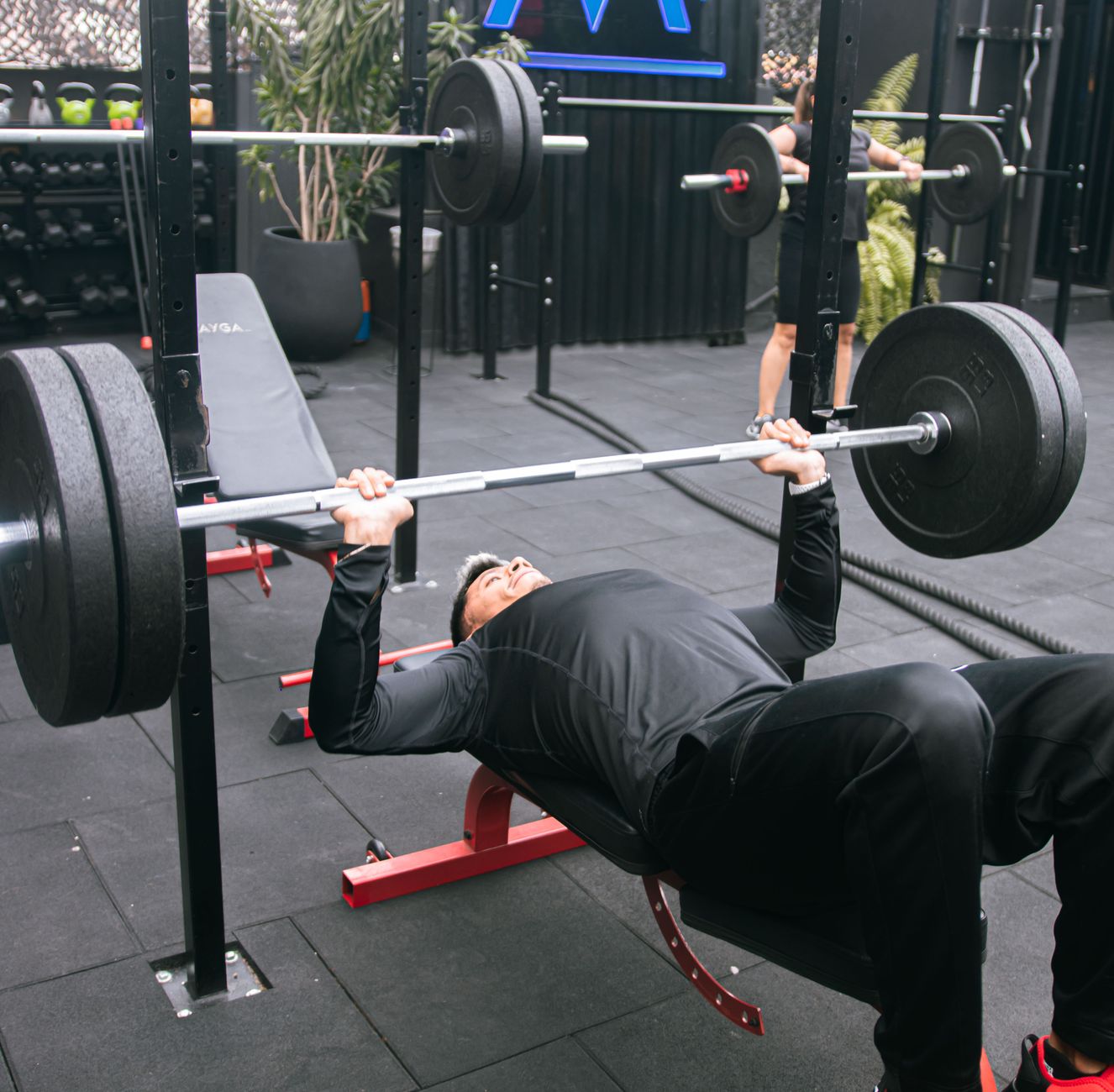
- Barbell Bench Press: Keep your shoulder blades retracted and depressed. Drive your feet into the floor. Lower the bar to your mid-chest, not your throat or stomach. Don’t bounce the bar off your chest. Mistake: Flaring elbows too wide, leading to shoulder impingement.
- Barbell Rows: Hinge at the hips, keeping your back straight. Pull the bar towards your lower sternum/upper abs. Squeeze your back muscles at the top. Mistake: Using momentum to yank the weight up, turning it into a bad deadlift.
- Barbell Squats: Chest up, core braced. Descend as deep as your mobility allows without your lower back rounding. Drive through your heels. Mistake: Letting your knees cave inward (valgus collapse). A good knee sleeve like these can help provide support and proprioception.
- Romanian Deadlifts (RDLs): Keep a slight bend in your knees throughout the movement. Hinge at the hips, pushing them back as you lower the weight. Keep the bar close to your shins. Feel the stretch in your hamstrings. Mistake: Rounding your lower back to get the weight lower.
- Overhead Press: Brace your core like you’re about to get punched. Press the bar slightly behind your head, not directly overhead. Keep your glutes squeezed. Mistake: Arching your lower back excessively to push the weight up.
Common Mistakes to Avoid:
- Ego Lifting: Adding weight you can’t control. This is how you get hurt and stunt growth. Your ego has no place on the barbell.
- Half-Repping: Not getting full range of motion. You’re cheating yourself out of stimulus.
- Ignoring RIR: Always going to failure. This leads to burnout and poor recovery. Learn to gauge your RIR.
- Poor Exercise Selection: Not choosing exercises that allow you to effectively load the target muscle group.
- Inconsistent Progression: Not having a clear plan to increase weight or reps over time.
Gear I Use
For heavy squats, a solid weightlifting belt is non-negotiable. It helps you brace harder and transfer force more effectively. We recommend something like the Rogue Fitness Ohio Belt for its stiffness and support. For deadlifts, if your grip is the limiting factor, straps can allow you to get more out of your back and hamstrings.
FAQ
What is RIR and why is it important for building muscle? RIR stands for Reps in Reserve. It’s how many more reps you could have done with good form. It’s important because sets taken to 1-3 RIR provide a potent stimulus for muscle growth without the excessive fatigue and risk of injury associated with training to absolute failure on every set.
How many days a week should I train to build muscle without training to failure? For most lifters, 3-4 days a week is optimal. This allows for sufficient frequency to stimulate growth and adequate rest to recover and adapt. An Upper/Lower split or a Full Body routine works well.
Can I still get strong without training to failure? Absolutely. Strength gains are driven by progressive overload and proper technique. By training with 1-3 RIR, you can consistently lift heavier weights over time while managing fatigue, leading to significant strength increases.
What if I accidentally go to failure on a set? It happens. Don’t panic. Just ensure it’s not a regular occurrence. If you do fail a set, make a note of it, focus on controlled recovery, and be extra mindful of your RIR on subsequent sets. It’s a learning opportunity.
How long will it take to see results building muscle without training to failure? Muscle growth takes time and consistency, regardless of your training strategy. With this approach, you can expect to see noticeable progress in muscle size and strength within 8-12 weeks, provided you’re consistent with your training, nutrition, and recovery.
Conclusion
Stop chasing the failure dragon. It’s a myth, a distraction from what truly builds muscle: smart, consistent effort. You can build muscle without training to failure by focusing on progressive overload, mastering Reps in Reserve (RIR), and executing each rep with intent. This approach keeps you in the gym longer, healthier, and ultimately, makes you bigger and stronger. Today, make a commitment. Review your next workout plan. Identify where you can dial in your RIR and focus on that quality over quantity. Your muscles will thank you for it.
Related Articles
- How Much Protein Do You Actually Need Per Day to Build Muscle for Serious Lifters 2026
- Bulking vs Cutting for Serious Lifters: How to Do Both Right and When to Switch in 2026
- How to Build a Push Day Workout for Serious Lifters: Exercises, Sets, & Reps (2026)
- HIIT vs Steady State Cardio: Which Burns More Fat and When to Use Each
Where to Buy


💬 Join the Conversation
Have thoughts on this article? We'd love to hear from you.