
When you purchase through links on our site, we may earn an affiliate commission. How it works.
- The Core Rule: You can’t grow without forcing adaptation; if you lift 225 pounds for 8 reps today, and you’re still lifting 225 pounds for 8 reps next year, your chest will look exactly the same.
- The Progression Model: Track your lifts and use the double progression method—increase your reps within a target range first, then increase the load.
- The Ego Check: Throw out half-reps, bouncing, and excessive momentum; true progressive overload requires perfect form so the target muscle actually takes the tension.
This progressive overload guide is your antidote to the plateau you have been stuck on for the last six months. The year I stopped chasing a mindless pump and focused purely on adding weight to the bar systematically, my bench press jumped 40 pounds and my chest finally grew. In our experience, too many lifters walk into the gym with no plan, grab the same dumbbells they used last week, perform the same sloppy sets of ten, and wonder why their t-shirts still fit loose. They’re looking for magic supplements or secret Russian training templates when the real problem is staring them right in the mirror: they don’t know how to apply progressive overload correctly.
We’ve spent decades under the iron, and we’ve made every single mistake in the book. We’ve chased the burn, ego-lifted ourselves into shoulder impingements, and wasted years on high-volume garbage routines that did nothing but burn calories. The truth is simple: your body doesn’t want to build muscle. Muscle is metabolically expensive tissue that your body would rather burn off. To force it to grow, you must give it an undeniable, brutal reason to adapt. That means you need to get stronger, more efficient, and more disciplined with your training logs. Stop half-repping and read this.
Why Is Progressive Overload Necessary for Muscle Growth?
Your muscles don’t have eyes. They don’t know how many plates are on the bar, and they don’t care about the brand name on your gym chalk. They only recognize mechanical tension, muscle damage, and metabolic stress. When you lift a weight that challenges your current capacity, you create microscopic tears in the muscle fibers. Your body responds to this stress by repairing those fibers thicker and stronger so they can handle that same stress more easily next time.
If you don’t increase the stress, the adaptation stops. This is basic evolutionary biology, not bro-science. The moment your body realizes it can handle your current workout without dying, it stops building new muscle tissue. To keep the adaptation loop running, you must constantly demand more of your musculoskeletal system.
[Systemic Stress] -> [Microscopic Damage] -> [Nutrient Delivery & Rest] -> [Supercompensation (Growth)] -> [Increase Load/Reps] -> [Repeat] Most guys get this wrong because they think progressive overload only means adding weight to the barbell. That’s a one-way ticket to Snap City. If you try to add five pounds to your bench press every single week indefinitely, you would be benching 500 pounds in two years. That doesn’t happen. You have to understand the other levers of progression: adding reps, increasing sets, improving lifting tempo, and reducing rest times. We focus on these variables to keep the gains coming without destroying our joints in the process.
How Do You Apply Progressive Overload in the Gym?
Related reading: 4-Day Upper Lower Split: The Complete Workout Plan for Strength & Size
To put this into practice, you need a structured, repeatable training day. You can’t wing this. You need to write down every set, every rep, and the exact weight you used. Below is an upper-body hypertrophy and strength template that we run when we need to kickstart new growth.
| Exercise | Sets | Reps | Rest Time | Tempo |
|---|---|---|---|---|
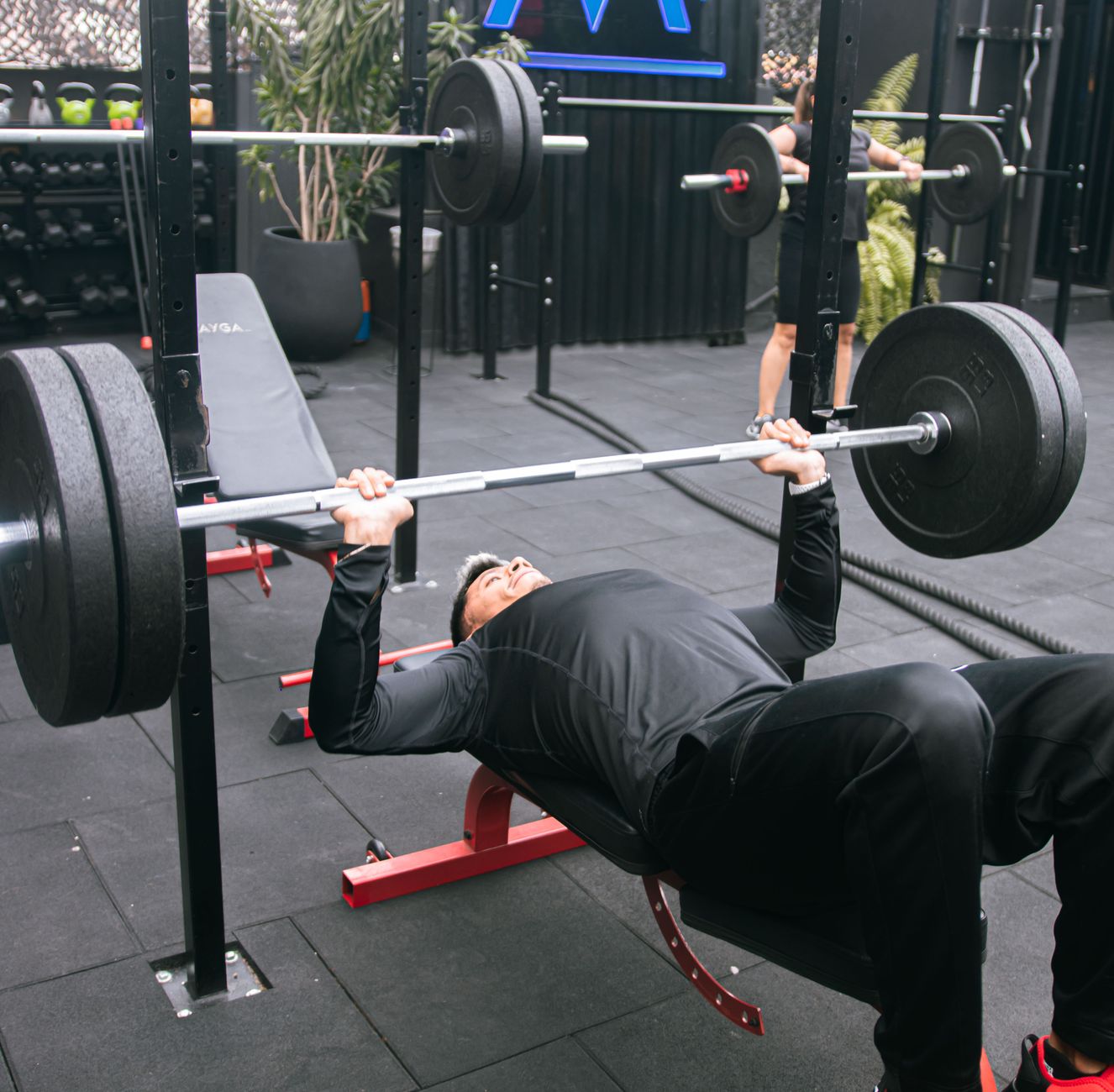
| Barbell Bench Press | 4 | 6-8 | 180 sec | 3-1-X-1 |
| Pendlay Rows | 4 | 8-10 | 120 sec | 2-0-1-1 |
| Standing Overhead Press | 3 | 8-10 | 120 sec | 3-0-X-1 |
| Weighted Pull-Ups | 3 | 6-8 | 120 sec | 3-1-1-1 |
| Incline Dumbbell Flyes | 3 | 10-12 | 90 sec | 4-1-1-0 |
Note on Tempo: The four-digit code represents the phases of the lift. For example, 3-1-X-1 on the bench press means a 3-second eccentric (lowering), a 1-second pause at the chest, an explosive concentric (pushing), and a 1-second squeeze at the top.
This program is designed to hit both your primary compound movers and your key stabilizers. If you want to make this template work, you have to treat every rep like a contract. No bouncing the bar off your chest on the bench press. No using your hips to swing the weight up on the Pendlay rows. If you cheat the form to get the rep, you did not overload the muscle; you just overloaded your ego.
How Do I Apply Progressive Overload Week Over Week?
Now, let us talk about the actual math of building muscle. To apply progressive overload, we use the double progression method. This is the safest and most reliable way to ensure you’re actually getting stronger without burning out your central nervous system.
Here is how you execute it using the Barbell Bench Press from the program above (target: 4 sets of 6-8 reps):
- Week 1: You load 225 pounds. You hit 8, 7, 6, and 6 reps across your four sets. You don’t increase the weight because you did not hit the top of the rep range (8 reps) on all four sets.
- Week 2: You keep 225 pounds on the bar. You hit 8, 8, 7, and 7 reps. You’re getting stronger, but you’re still not ready to jump.
- Week 3: You keep 225 pounds. You dig deep and hit 8, 8, 8, and 8 reps. You have conquered this weight.
- Week 4: You add 5 pounds to the bar (230 pounds total). Your reps drop back down to 7, 6, 6, and 5. This is normal. Now, your goal for the next few weeks is to fight your way back up to 4 sets of 8 reps with 230 pounds.
Week 1: 225 lbs x 8, 7, 6, 6 Week 2: 225 lbs x 8, 8, 7, 7 Week 3: 225 lbs x 8, 8, 8, 8 <— Goal Met! Week 4: 230 lbs x 7, 6, 6, 5 <— New Baseline This is how real progress is made. It’s slow, it’s boring, and it requires you to keep an accurate training log. If you’re not writing down your numbers, you’re just playing in the dirt. You won’t remember what you did last Tuesday for your third set of rows. Write it down, beat the logbook, and the growth will follow.
Form Cues & Common Mistakes That Kill Progress
Related reading: Beginner Workout Plan: 3-Day Full-Body Program with 8-Week Progression
If your execution is garbage, your progression is a lie. We see guys in every gym loading up three plates on the squat rack, dropping down four inches, and screaming like they just won an Olympic medal. That’s not progressive overload; that’s joint destruction.
The Half-Rep Trap
When the weight gets heavy, your brain naturally wants to shorten the range of motion to make the lift easier. You must fight this survival instinct. On squats, your hips must crease below your knees. On bench press, the bar must touch your sternum. On pull-ups, your chin must clear the bar, and your arms must fully extend at the bottom. If you increase the weight but decrease the range of motion, you have actually decreased the total work done by the muscle. You’re getting weaker, not stronger.
Bouncing and Momentum
If you’re using momentum to move the iron, you’re transferring the tension from your muscles to your tendons and joints. When you bounce a deadlift off the floor, you’re using kinetic energy to get past the hardest part of the lift. When you swing your torso on bicep curls, your lower back is doing the work, not your arms. Control the eccentric phase. Pause for a split second at the transition point. Force the target muscle to generate the force from a dead stop.
What Rep 8 Should Feel Like
When we write “8 reps” in a program, we don’t mean a comfortable eight. We mean you should hit rep 8 with maybe 1 or 2 reps left in the tank (RPE 8-9). The last two reps of your set should look identical to your first two reps, just slower. Your muscles should be screaming, your veins should be bulging, and your grip should feel like it’s about to fail. If you finish your eighth rep and could easily do five more, you picked the wrong weight. Get serious and load the bar.
Gear We Actually Use to Support the Load
We don’t believe in relying on gear as a crutch for weak muscles or poor stability. If you can’t squat bodyweight, you don’t need a belt. However, when you start moving real weight, the right gear can protect your spine and keep your joints warm so you can train hard week after week.
[Proper Warm-up] -> [Solid Form] -> [Sartorial Support (Belt/Straps)] -> [Maximum Safe Output] When we are pushing our limits on heavy compound movements like deadlifts and rows, our grip strength is often the first thing to give out. To ensure our backs get the full hypertrophic stimulus without our hands slipping, we use heavy-duty lifting straps to lock our hands to the steel.
For heavy squats and overhead presses, securing your midsection is non-negotiable. A stiff leather weightlifting belt gives your abs and lower back something to brace against, drastically increasing intra-abdominal pressure and protecting your lumbar spine under heavy loads. Buy gear that’s built to last, use it only on your heaviest working sets, and keep your focus on execution.
FAQ
What is the most common mistake when trying to apply progressive overload?
The most common mistake is focusing exclusively on adding weight to the bar while sacrificing form and range of motion. If you increase the load but cut your depth on a squat or bounce the bar off your chest on a bench press, you’re reducing the tension on the target muscle. You must keep your execution identical week over week for your weight increases to be meaningful.
How often should I increase the weight on my lifts?
You should only increase the weight once you can successfully complete all the programmed sets and reps with perfect form at your current weight. For most intermediate lifters, this will happen every two to four weeks on compound lifts, and even slower on isolation movements. Don’t rush the process; adding five pounds every few weeks leads to massive strength gains over a year.
Can you apply progressive overload without adding weight?
Yes, you can easily apply progressive overload by increasing the number of reps you perform with a specific weight, adding more total working sets, slowing down your repetition tempo, or reducing your rest times between sets. All of these methods increase the total work your muscles must perform, which forces new muscular adaptations and growth.
Why have I stopped progressing on my compound lifts?
If your lifts have stalled, you’re likely failing to recover properly outside of the gym, or your training volume has outpaced your body’s ability to adapt. Ensure you’re sleeping at least seven to eight hours a night, eating a caloric surplus with sufficient protein, and incorporating scheduled deload weeks every six to eight weeks to let your joints and nervous system recover.
Is progressive overload necessary for beginners?
Yes, it’s the most critical principle for beginners, though they will experience it much faster than seasoned lifters. Beginners can often add weight to the bar almost every single workout due to rapid neurological adaptations. If you’re a beginner, follow a simple linear progression program and focus heavily on mastering your lifting form before the weights get truly heavy.
The Hard Truth About Growing
There are no shortcuts to this game. You can buy the most expensive pre-workouts, wear the trendiest gym clothes, and follow the most complicated training splits on the internet, but if you don’t respect the law of progressive overload, you’ll remain exactly the same size you’re today. The human body is an efficient machine that only builds muscle when it has absolutely no other choice.
Your next step starts today. Grab a physical notebook or open a dedicated app on your phone. Write down the exercises, sets, reps, and weights for your next workout. When you step onto the gym floor, your only goal is to beat those numbers by one rep or one pound. Put in the damn work, hold yourself accountable to perfect form, and watch how fast your body responds to real, honest training.
Related Articles
- How Much Protein Do You Actually Need Per Day to Build Muscle for Serious Lifters 2026
- Bulking vs Cutting for Serious Lifters: How to Do Both Right and When to Switch in 2026
- How to Build a Push Day Workout for Serious Lifters: Exercises, Sets, & Reps (2026)
- HIIT vs Steady State Cardio: Which Burns More Fat and When to Use Each
Where to Buy


💬 Join the Conversation
Have thoughts on this article? We'd love to hear from you.