When you purchase through links on our site, we may earn an affiliate commission. How it works.
Quick Answer
- Attack mobility: Prioritize daily ankle and hip mobility drills.
- Drill proper form: Use goblet squats, paused squats, and box squats to establish depth with light weight.
- Strengthen your foundation: Build glute, hamstring, and core strength to support a deep squat.
The year we stopped chasing ego and started chasing squat depth, our entire lower body game changed. We’d seen countless lifters, and hell, even we made the mistake ourselves: loading up the bar, grinding out quarter-reps, and calling it a squat. That’s not a squat. That’s a partial range of motion ego trip. If you’re serious about adding real plates to the bar, building actual power, and finally learning how to fix squat depth, then you need to commit. This isn’t about magic pills or some secret guru technique. This is about putting in the damn work. Stop wasting your time on half-ass reps that build nothing but your ego. Start squatting deep, and watch everything else fall into place. We’ve been through the struggle, learned the hard way, and this is the roadmap.
Why It Works: The Mechanics of a Deep Squat
Hitting parallel, or even below, isn’t just about showing off. It’s about maximizing muscle recruitment, building strength through a full range of motion, and protecting your joints. When you half-rep, you’re missing out on serious glute and hamstring activation. You’re leaving gains on the table. I’ve seen it happen a million times.
A deep squat demands a complex interplay of mobility and stability. Your ankles need to dorsiflex, your hips need to externally rotate and flex, and your thoracic spine needs to maintain extension. If any link in that chain is weak or stiff, your body will compensate. It’ll round your back, allow your knees to cave, or simply stop you short. It’s physics, plain and simple.
We’re not just trying to force a position. We’re building the physical capacity to own that position. This means improving the flexibility of the limiting joints and strengthening the muscles that hold you stable at depth. It’s a two-pronged attack: unlock what’s tight, then fortify what’s weak. This isn’t bro-science; it’s biomechanics. Ignore it at your own peril. Honestly, it’s basic engineering for your body.
The Program: Your 8-Week Depth Fix
Related reading: 4-Day Upper Lower Split: The Complete Workout Plan for Strength & Size
This isn’t a replacement for your regular leg day. This is an addition. You’ll incorporate these drills and specific squat variations into your existing routine, preferably before your main leg workout, or on an off-day dedicated to mobility and technique. Do this 2-3 times per week. Consistency is key. My only gripe is that it adds extra work, but what good thing doesn’t?
Phase 1: Unlock & Drill (Weeks 1-4)
The focus here is on breaking through stiffness and grooving the movement pattern. Forget heavy weight. We’re chasing perfect movement.
| Exercise | Sets | Reps | Rest/Tempo |
|---|---|---|---|
| Mobility Circuit (Perform as a warm-up) | |||
| Kneeling Ankle Rockers | 2 | 10/side | Hold stretch at end range for 2 seconds. Focus on pushing knee past toes. |
| Couch Stretch | 2 | 60 sec/side | Deep hip flexor stretch. Keep glute tight, torso upright. |
| Spiderman Lunge with Thoracic Twist | 2 | 5/side | Reach elbow to floor, then twist and reach arm to ceiling. Slow and controlled. |
| Technique & Strength Drills | |||
| Goblet Squat (to full depth) | 3 | 8-12 | 2 sec pause at bottom. Focus on knees out, chest up. Use a challenging but controlled weight. |
| Box Squat (to slightly below parallel) | 3 | 6-8 | 3 sec eccentric, light touch on box, no resting. Explosive up. |
| Pause Squat (empty bar or light weight) | 3 | 5 | 5 sec pause at bottom. Focus on maintaining tension and proper bracing. |
| Glute Bridges (weighted) | 3 | 12-15 | 2 sec squeeze at top. Drive through heels. |
| Dumbbell Romanian Deadlifts (RDLs) | 3 | 10-12 | Focus on hip hinge, feel stretch in hamstrings. Maintain neutral spine. |
Kneeling Ankle Rockers: Kneel with one foot flat on the floor, knee over ankle. Lean forward, pushing your knee past your toes, keeping your heel down. You should feel a deep stretch in your ankle. This is non-negotiable for squat depth. If your ankles are tight, your body will fight you. I used to blow these off. Big mistake.
Couch Stretch: Get into a lunge position facing away from a couch or bench. Place the top of your back foot on the couch. Drive your hips forward, keeping your torso upright. This obliterates tight hip flexors that pull you forward and limit depth. This one burns, but it works.
Spiderman Lunge with Thoracic Twist: Step into a deep lunge. Place your hands on the floor inside your front foot. Drop your elbow towards the floor, then rotate your torso and reach your opposite arm to the ceiling. This opens up hips and thoracic spine – crucial for keeping your chest up. It feels good, and it unlocks your upper back.
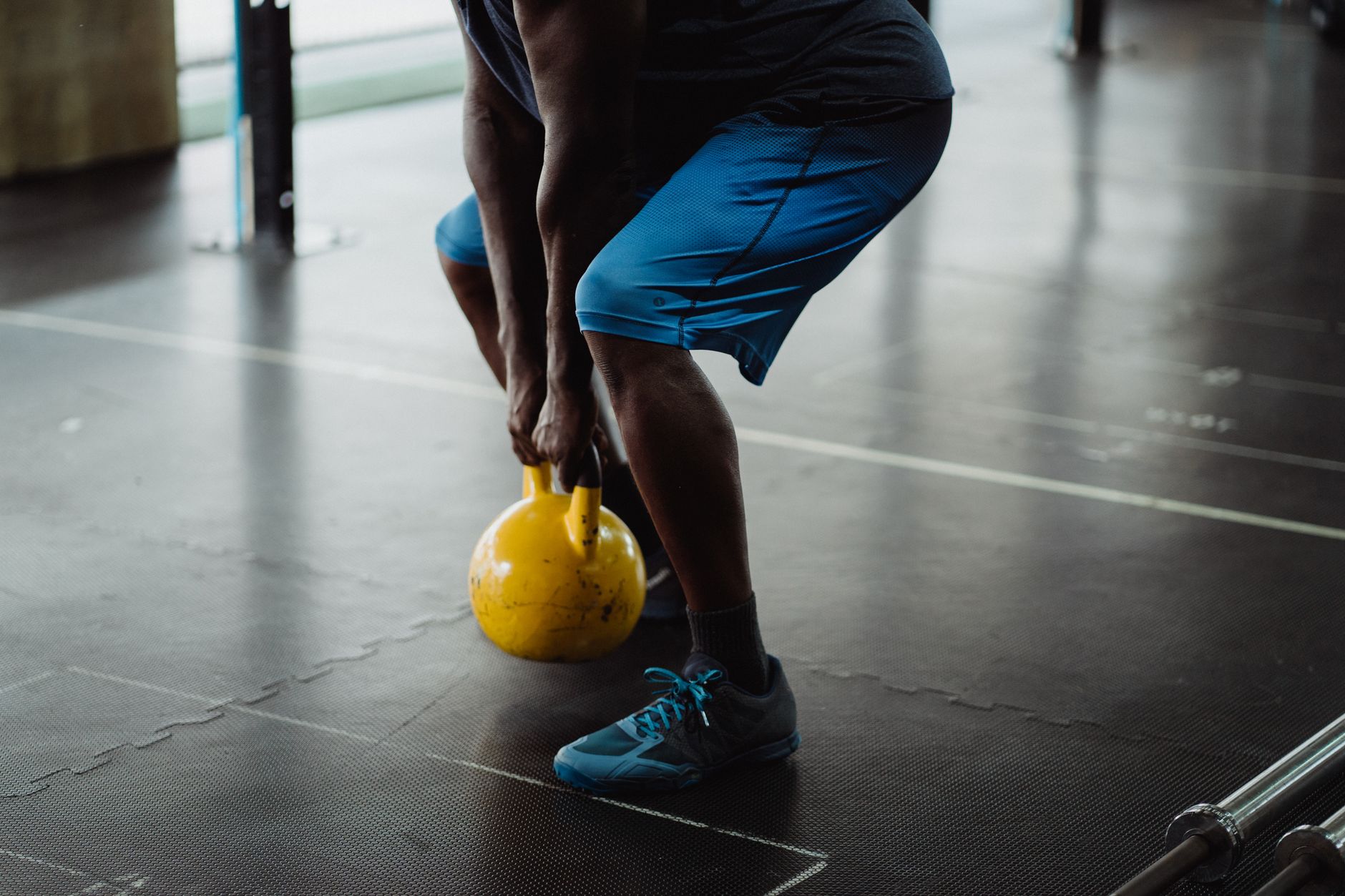
Goblet Squat: Hold a dumbbell or kettlebell vertically against your chest. Squat down, focusing on keeping your chest proud and driving your knees out. The weight in front acts as a counterbalance, making it easier to stay upright and hit depth. This is where you learn to sit between your knees, not just down. It’s the perfect drill to teach you the movement.
Box Squat: Set a box or bench slightly below parallel. Squat down with control, lightly touch the box, then explode back up. No bouncing. No resting. The box provides a target and helps you get comfortable with the depth without fear. It teaches you to control the eccentric phase and stay tight. I’ve made every mistake with box squats, but this is the right way.
Pause Squat: With an empty bar or very light weight, squat down and hold the bottom position for 5 seconds. This builds isometric strength, improves proprioception, and forces you to maintain tension and bracing at depth. You’ll feel every muscle working to keep you from collapsing. This feels way harder than it looks.
Phase 2: Integrate & Strengthen (Weeks 5-8)
Now we start integrating your improved depth into your main squat. The mobility work continues, but we layer in more strength and specific depth practice. This is where you see the real payoff.
| Exercise | Sets | Reps | Rest/Tempo |
|---|---|---|---|
| Mobility Circuit (Perform as a warm-up) | |||
| Kneeling Ankle Rockers | 2 | 10/side | Hold stretch at end range for 2 seconds. Focus on pushing knee past toes. |
| Couch Stretch | 2 | 60 sec/side | Deep hip flexor stretch. Keep glute tight, torso upright. |
| Spiderman Lunge with Thoracic Twist | 2 | 5/side | Reach elbow to floor, then twist and reach arm to ceiling. Slow and controlled. |
| Technique & Strength Drills | |||
| Primary Squat Variation (Barbell Back Squat / Front Squat) | 4 | 5-8 | Focus on perfect depth. If you can’t hit it, lower the weight. 2-3 sec eccentric. |
| Tempo Squats (light weight) | 3 | 6-8 | 4 sec eccentric, 2 sec pause at bottom, explosive concentric. Focus on control through full range. |
| Bulgarian Split Squats | 3 | 8-10/side | Focus on deep range of motion, controlled descent. |
| Hip Thrusts (heavy) | 3 | 8-12 | Drive through heels, full hip extension, squeeze glutes hard at top. |
| Good Mornings | 3 | 8-10 | Maintain neutral spine, feel stretch in hamstrings and glutes. Controlled movement. Light weight is key. |
Primary Squat Variation: This is where you apply everything you’ve learned. Whether it’s barbell back squats or front squats, the absolute priority is hitting depth. If you have to drop 20-30% off your working weight initially, do it. Your ego will hate it, but your legs will thank you. Think about sitting down into the squat, not just bending your knees. Maintain that upright torso from your goblet squats. Drive your knees out hard, just like you learned with the box. I found myself dropping 30 lbs initially, and it was humbling, but necessary.
Tempo Squats: These are brutal, but they force control. A 4-second descent means you’re fighting gravity and your own stiffness all the way down. The 2-second pause at the bottom solidifies your position and builds strength in the hole. This isn’t about moving weight; it’s about mastering movement. You’ll likely need to use lighter weights than you expect. Fair warning: these will make your quads scream.
Bulgarian Split Squats: Unilateral work is crucial for identifying and fixing imbalances. Focus on dropping your back knee straight down, maintaining an upright torso, and pushing through the heel of your front foot. Aim for a full range of motion, getting your front thigh parallel or below. I always felt my weak side on these.
Hip Thrusts: These are pure glute builders. Strong glutes are non-negotiable for a powerful, deep squat. They help stabilize your hips at the bottom and drive you out of the hole. Load these heavy, get a full squeeze at the top, and feel your ass catch fire. No bullshit.
Good Mornings: Excellent for strengthening your posterior chain and teaching you to maintain a rigid torso under load. Use a light barbell across your traps, maintain a slight bend in your knees, and hinge at your hips. Keep your back straight, don’t let it round. You should feel a deep stretch in your hamstrings and glutes. This builds the strength needed to prevent “good morning” squats, where your hips shoot up too fast.
Progression: Keep Adding Plates, Not Excuses
Progression is simple. Don’t overthink it. I’ve seen too many guys stall because they complicated this part.
- Master the movement: For the first 2-4 weeks, your goal isn’t necessarily to add weight, but to hit perfect depth with every single rep. If you can’t, drop the weight. Period.
- Increase Reps: Once you can comfortably hit the top end of the rep range (e.g., 12 for goblet squats, 8 for box squats) with perfect form and depth, add 1-2 reps per set for the next session.
- Increase Weight: Once you consistently hit the top end of the rep range for 2-3 sessions, it’s time to add weight. A small jump, 5-10 lbs, is enough. Then drop back to the lower end of the rep range and work your way up again.
- Decrease Assistance: For your box squats, gradually lower the box height until you’re squatting to below parallel without it. For pause squats, gradually reduce the pause time as you get stronger, eventually transitioning to full-speed squats with perfect depth.
This is a long game. You’re not going to fix years of bad habits in a week. Expect to dedicate 8-12 weeks minimum to truly ingrain these changes. Some days it will feel like shit. Push through it. The gains are waiting.
Form Cues & Common Mistakes: What Kills Your Depth
Related reading: Beginner Workout Plan: 3-Day Full-Body Program with 8-Week Progression
Listen up. Your form is everything. Ego lifting is the fastest way to stay weak and get hurt. I’ve had to swallow my pride more than once to fix my own shit.
Nail These Cues:
- “Screw your feet into the floor.” This activates your glutes and helps drive your knees out. Imagine you’re trying to twist the floor apart with your feet.
- “Knees out!” Don’t let them collapse inwards. Drive them out, tracking over your toes. This creates space for your hips to drop.
- “Chest up, show the logo.” Keep your torso upright. Don’t let your chest collapse or your back round. This keeps the bar over your midfoot and maintains a strong spinal position.
- “Brace hard, breathe into your belly.” Take a huge breath into your diaphragm, not your chest. Hold it tight. This creates intra-abdominal pressure, stabilizing your spine and making you strong as hell. Don’t just hold your breath, brace your core like you’re about to take a punch.
- “Sit between your knees.” Imagine you’re sitting on a low toilet, not folding forward. Your hips should drop straight down, not shoot back excessively.
Common Mistakes That Kill Depth:
- Ego Lifting: This is number one. You load up too much weight, your form collapses, and you stop short. Drop the weight. Nobody cares how much you think you can lift if it looks like garbage.
- Lack of Ankle Mobility: If your ankles are tight, your heels will lift, or your torso will pitch forward. You must do the ankle mobility work. I used to ignore this and paid the price.
- Weak Glutes/Hamstrings: If your posterior chain is weak, your hips won’t be able to drop deep, or you’ll lose stability at the bottom. The glute bridges, RDLs, and hip thrusts are here to fix that.
- Poor Bracing: No brace, no stability. You’ll round your back or feel unstable at the bottom. Learn to breathe and brace properly. This is critical for both depth and safety.
- Knees Caving In (Valgus Collapse): This usually points to weak glutes (specifically glute medius) or poor motor control. Focus on “knees out” and strengthen those hips.
- Rushing the Descent: If you just drop like a sack of bricks, you lose control and tension. Control the eccentric. Use tempo.
- Looking Down: This rounds your upper back and causes your chest to fall. Keep your gaze neutral, looking slightly forward or at a spot on the floor a few feet in front of you.
Gear I Use
You don’t need gear to squat deep, but a few tools can help you lift heavier after you’ve fixed your form and depth. Don’t use gear to compensate for poor mechanics.
For heavy sets, especially as the weight climbs and you’re squatting deep, a good weightlifting belt can help you maintain intra-abdominal pressure and brace harder. It’s a tool, not a crutch. We also use knee sleeves for warmth and compression, especially on high-volume squat days. They keep the knees feeling good, but they won’t magically fix your depth. That’s on you.
FAQ
Why can’t I hit squat depth even if I feel flexible?
Often, it’s not just flexibility but also stability and motor control. You might have the range of motion, but lack the strength to control the weight in that deep position. Weak glutes or a core that doesn’t brace properly can prevent you from comfortably hitting depth.
How long does it typically take to fix shallow squat depth?
With consistent effort, you can see noticeable improvements in 4-8 weeks. However, true mastery and making deep squatting second nature might take several months, especially if you have significant mobility restrictions or long-standing bad habits. Stick with the program.
Should I force myself into a deep squat even if it causes pain?
Absolutely not. Pain is your body’s alarm system. Forcing a deep squat through pain can lead to injury. Identify the source of the pain – often it’s a mobility restriction or improper form – and address that first with corrective exercises, not brute force.
Are box squats effective for improving squat depth?
Yes, when done correctly. Box squats provide a tactile cue for how deep to go and help you learn to sit back without fear. They also teach you to control the eccentric and stay tight at the bottom, but remember not to relax or bounce off the box.
Does ankle mobility truly play a significant role in squat depth?
A massive role. If your ankles are stiff, your body will compensate by either pitching your torso forward excessively or lifting your heels, both of which compromise depth and increase injury risk. Unlocking ankle dorsiflexion is often the first and most critical step for many lifters struggling with depth.
Conclusion
You want to know how to fix squat depth? You have the roadmap. It’s not complex, but it demands consistency and grit. Ditch the ego. Prioritize mobility, drill perfect form with lighter weights, and build the strength required to own that deep position. There are no shortcuts. No magic pills. Just the work. Start today. Get those ankles loose, hit those goblet squats, and then get under the damn bar with purpose. Your gains are waiting at the bottom.
Related Articles
- How Much Protein Do You Actually Need Per Day to Build Muscle for Serious Lifters 2026
- Bulking vs Cutting for Serious Lifters: How to Do Both Right and When to Switch in 2026
- How to Build a Push Day Workout for Serious Lifters: Exercises, Sets, & Reps (2026)
- HIIT vs Steady State Cardio: Which Burns More Fat and When to Use Each
Where to Buy


💬 Join the Conversation
Have thoughts on this article? We'd love to hear from you.