
When you purchase through links on our site, we may earn an affiliate commission. How it works.
- No, not indefinitely. While the principle of progressive overload can be applied forever, your ability to add weight or reps to the bar has biological and practical limits.
- Focus on consistent progress, not infinite progress. Aim to improve week-to-week or month-to-month, not to break world records every single session.
- Recovery is king. If you’re not sleeping, eating, and managing stress, your capacity for progressive overload will stall faster than a cheap gym bike.
The question on every serious lifter’s mind: can you progressive overload forever? We see the gurus on social media claiming insane numbers, pushing themselves to the brink. It makes you wonder if there’s some secret sauce, some magic supplement, or a training split that unlocks infinite gains. The truth is, while the concept of adding more weight or reps never dies, your body’s ability to respond to it isn’t boundless. Chasing the dragon of progressive overload forever is a good way to get injured or burnt out. We’re talking about consistent, smart progress, not some mythical never-ending ascent up the weight plate ladder. Most guys get caught up in the ego. They want to see the number go up, even if it means sacrificing form. That’s not how you build a strong, resilient physique. That’s how you end up with a torn pec and a lot of regret. Let’s cut through the noise and talk about what actually works, and what the hard limits are.
Why It Works
Progressive overload is the bedrock of strength and muscle gain. It’s simple: you consistently challenge your muscles to do more than they’re accustomed to. This forces them to adapt. They get stronger. They get bigger. It’s a biological imperative. Think about it. If you lift the same weight, for the same reps, every single workout, your body has no reason to change. It’s already mastered that load. It’s comfortable. Comfort is the enemy of progress. So, you introduce a new stressor. A little more weight. An extra rep. A slightly slower eccentric. Your muscle fibers tear a microscopic amount. Your nervous system learns to recruit more motor units. Hormones flood the system. Over time, with adequate rest and nutrition, those torn fibers repair stronger and larger. This adaptation is the engine that drives your gains. Without it, you’re just spinning your wheels. It’s not magic; it’s biology responding to demand. The principle itself is sound and will always be applicable. The question is how long you can keep up the demand without breaking down.
The Program / The Technique
Related reading: 4-Day Upper Lower Split: The Complete Workout Plan for Strength & Size
We’re not going to give you some complicated, periodized monstrosity. We’re talking about the core lifts. The ones that build real strength. This is a template. Adjust the weights based on your current strength. The goal is to hit the prescribed reps with good form, then find a way to do more next time.
| Exercise | Sets | Reps | Rest |
|---|---|---|---|
| Barbell Back Squat | 4 | 5-8 | 2-3 min |
| Romanian Deadlift (RDL) | 4 | 6-10 | 2-3 min |
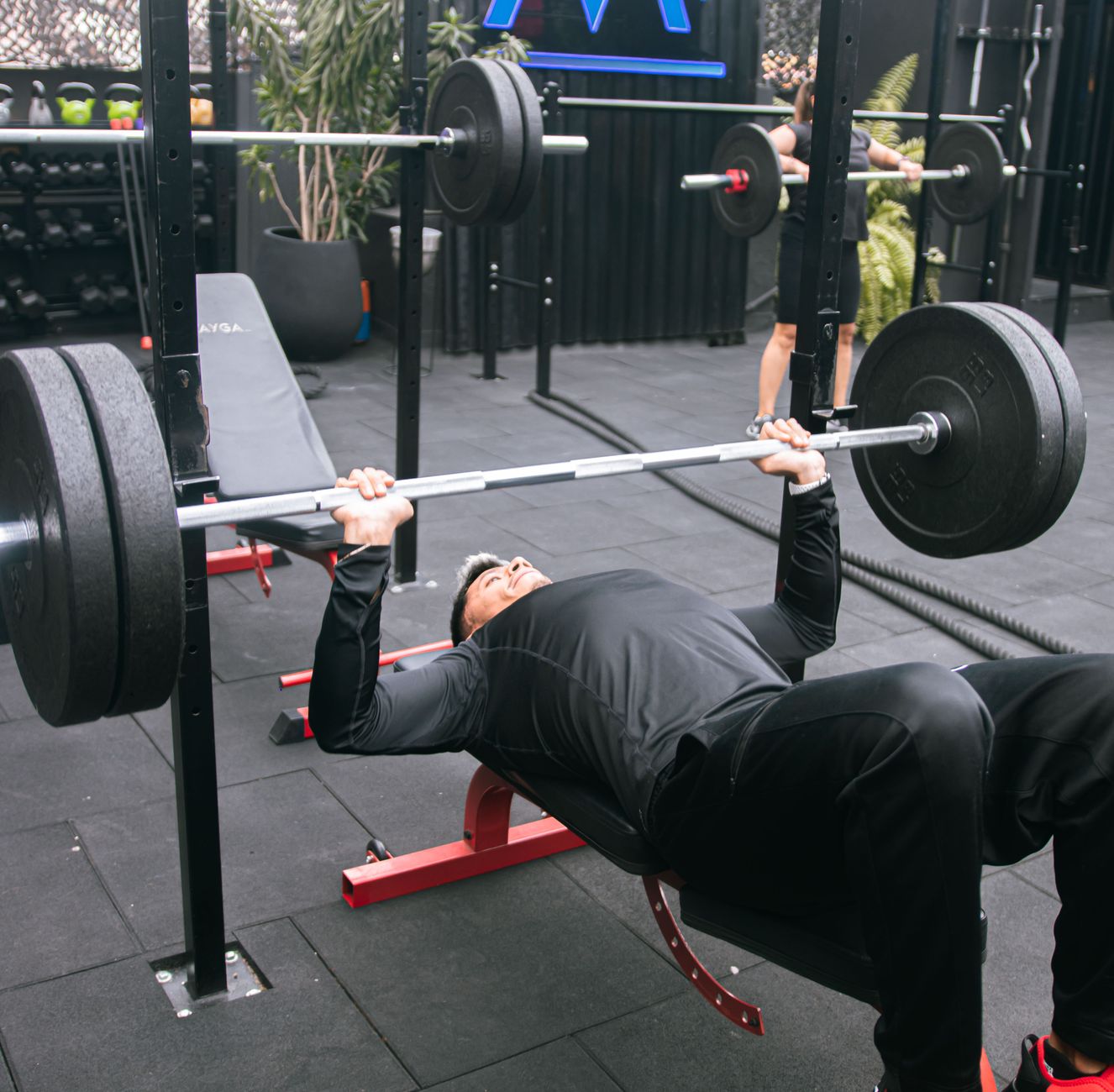
| Bench Press (Barbell) | 4 | 5-8 | 2-3 min |
| Overhead Press (Barbell) | 4 | 6-10 | 2-3 min |
| Barbell Row | 4 | 8-12 | 2 min |
| Pull-ups/Lat Pulldowns | 4 | As many | 2 min |
This is the foundation. Focus on these movements. Get strong here. The how of progression is what matters. You’re not trying to hit a 1RM every week. You’re trying to add one rep to a set. Or increase the weight by a small increment. If you’re doing 5 reps on squats, and you can do 6 with good form next week, that’s progress. If you’re benching 225 for 5, and you add 5 pounds and still hit 5 for all sets, that’s progress. This isn’t about chasing numbers; it’s about chasing adaptation. The reps are a guideline. If you can easily hit the top of the rep range for all sets, it’s time to add weight. If you can barely get the bottom of the rep range, you might need to deload or focus on technique. Don’t be a hero. Be smart. The iron will be there tomorrow.
Progression
Here’s how we add weight, reps, or intensity without resorting to bro-science or ego-driven madness.
The Core Principle: Incremental Gains.
- Weight Increase: The most straightforward. Once you can hit the top of the prescribed rep range for all sets of an exercise with good form, add a small amount of weight. For compound lifts like squats and bench, this is typically 2.5-5 lbs. For smaller isolation movements, it might be 1-2.5 lbs. Don’t get cute. Small, consistent increases are the path to long-term progress. If you hit 8 reps on your last set of squats, and you have another 8 reps in the tank with good form, load up the bar by 5 lbs next session and aim for 5-8 reps again. If you get 6, you’re still progressing.
- Rep Increase: If adding weight isn’t feasible or you’re stuck, focus on adding reps within the prescribed range. If you hit 5 reps on your first set of bench press, and you can manage 6 reps next time, do it. Work your way up to the top of the rep range before considering a weight jump. This builds work capacity and reinforces good technique under slightly more fatigue.
- Tempo Manipulation: This is where you can get creative after weight and reps stall. Slow down the eccentric (lowering) phase of the lift. For example, on squats, lower the weight for a controlled 3-4 seconds. This increases time under tension, which is a potent stimulus for hypertrophy. You might not be able to lift as much weight when controlling the eccentric, but you’re still challenging the muscle in a new way. This is a valid form of progression, especially if you’re not seeing strength increases. My only gripe here is that this can be harder to track than straight weight or rep increases.
- Frequency Adjustment: Sometimes, the issue isn’t the overload itself, but the recovery. If you’re consistently beat up, consider slightly increasing the frequency of a movement if you can recover, or decreasing it if you’re overtrained. This is less about adding weight and more about optimizing the stimulus. For example, if you’re only squatting once a week and stalling, maybe try squatting twice, but with less volume on the second day. This requires careful listening to your body.
What NOT To Do:
- Cheating Reps: Don’t use momentum, half-reps, or excessive body English to get the weight up. This isn’t progressive overload; it’s ego lifting and a fast track to injury. If you can’t hit the reps with strict form, the weight is too heavy. Period.
- Random Weight Jumps: Throwing on 20 lbs because you “feel strong” is reckless. Stick to small, calculated increases.
- Magic Supplement Schemes: There’s no pill that will let you bypass the fundamental principles of training and recovery. Save your money.
The goal is to create a stimulus that’s just beyond your current capacity, forcing adaptation. This stimulus needs to be applied consistently, but also allow for recovery. If you’re constantly pushing into the red, you’ll eventually crash. Think marathon, not sprint.
Form Cues & Common Mistakes
Related reading: Beginner Workout Plan: 3-Day Full-Body Program with 8-Week Progression
Let’s talk about what matters when you’re pushing the iron. This isn’t about looking pretty; it’s about moving weight safely and effectively.
Squats:
- Cue: Chest up, brace hard, drive knees out. Think of pushing the ground away. Your hips and shoulders should rise at roughly the same rate.
- Mistake: Butt wink. When your lower back rounds at the bottom of the squat. This is a sign you’ve gone too deep for your current mobility and strength. Stop before it happens. Another mistake is letting your knees cave inward. Keep them tracking over your toes.
RDLs:
- Cue: Keep a slight bend in the knees, push your hips back, and let the bar slide down your thighs. Feel the stretch in your hamstrings. Keep your back flat.
- Mistake: Rounding your lower back. This is a recipe for disaster. If your back rounds, the weight is too heavy, or you’re losing tension. Don’t let your ego dictate the weight here. Another mistake is not feeling the stretch in the hamstrings. You’re just bending over with a straight leg, which isn’t an RDL.
Bench Press:
- Cue: Retract and depress your shoulder blades. Create a slight arch in your lower back. Keep your feet planted firmly on the floor. Pull the bar into your chest.
- Mistake: Flaring your elbows too wide. This puts unnecessary stress on your shoulders. Keep them tucked at about a 45-degree angle. Another common error is bouncing the bar off your chest. This isn’t strength; it’s cheating.
Overhead Press:
- Cue: Brace your core like you’re about to take a punch. Drive the bar straight up overhead. Keep your glutes tight.
- Mistake: Arching your back excessively to push the weight up. You should be pushing the bar up, not leaning back to get it over your head. Keep the movement primarily in your shoulders and triceps.
Barbell Row:
- Cue: Hinge at the hips, maintain a flat back, and pull the bar towards your sternum. Squeeze your shoulder blades together at the top.
- Mistake: Using momentum to swing the weight up. This turns a back exercise into a back-damaging exercise. Control the eccentric portion of the lift. Don’t let the weight just drop.
Pull-ups:
- Cue: Initiate the pull with your lats. Drive your elbows down. Think about pulling your chest to the bar.
- Mistake: Shrugging your shoulders. This means you’re not engaging your lats effectively. Focus on the mind-muscle connection. If you can’t do full pull-ups, use an assisted pull-up machine or resistance bands. Don’t just do half-reps and call it a day.
The common thread here is control. If you can’t control the weight through the full range of motion with good form, you’re not progressing; you’re gambling. And the house always wins when it comes to your joints.
Gear I Use
When pushing heavy weight, certain tools can make a difference. They don’t magically make you stronger, but they help you stay safe and perform better.
For heavy squats, a good weightlifting belt is essential. It helps you brace your core more effectively, which translates to more stability and the ability to move more weight. For deadlifts and heavy rows, lifting straps can be a godsend. They allow you to focus on pulling with your back and hamstrings without your grip failing. These aren’t crutches; they’re tools to help you handle heavier loads and stimulate more growth. Fair warning: these tools won’t fix bad programming or recovery habits.
Not sure where your max actually sits? Our 1 rep max calculator runs all seven published formulas on the same set and shows you how far apart they land, so you can see how much to trust the number before you program around it.
FAQ
Q1: Can I really progress forever? A: In theory, yes, the principle of progressive overload can always be applied. In practice, your body has limits due to genetics, recovery capacity, and age. You can aim for consistent progress for a very long time, but not infinite, linear gains.
Q2: What if I can’t add weight or reps anymore? A: This is where you need to get smart. Focus on improving form, increasing time under tension with slower eccentrics, or slightly adjusting training frequency. Don’t force weight you can’t handle.
Q3: Is it okay to use weightlifting belts and straps? A: Absolutely. These are tools that help you train safely and effectively. A belt aids core bracing for heavy lifts, and straps can prevent grip failure, allowing you to focus on your back. They aren’t a substitute for building strength, but they can help you handle more load.
Q4: How much weight should I add each week? A: Start small. For major compound lifts like squats and deadlifts, 2.5-5 lbs is usually sufficient. For smaller lifts, 1-2.5 lbs. The goal is consistent, manageable increases, not massive jumps that compromise form.
Q5: What’s the biggest mistake people make when trying to achieve progressive overload forever? A: Ego. Most people push too hard, sacrifice form, and ignore their body’s need for recovery. This leads to plateaus, injuries, and burnout, stopping any chance of long-term progress.
Conclusion
The idea of progressive overload forever is a seductive one, but it’s a myth. Your body isn’t a machine that can endlessly scale up. However, the pursuit of consistent, intelligent overload is what separates those who get stronger from those who stay the same. Stop chasing the impossible and focus on the achievable. Listen to your body. Prioritize recovery. Dial in your technique. Make small, smart increases week after week. That’s the real path to long-term gains. Your next step today: review your last training session. Did you push hard, but smart? Were you honest about your reps and form? If not, that’s where you start. Make one adjustment. Add one rep. Slow down one eccentric. The iron waits for no one, but it rewards patience and discipline.
Related Articles
- How Much Protein Do You Actually Need Per Day to Build Muscle for Serious Lifters 2026
- Bulking vs Cutting for Serious Lifters: How to Do Both Right and When to Switch in 2026
- How to Build a Push Day Workout for Serious Lifters: Exercises, Sets, & Reps (2026)
- HIIT vs Steady State Cardio: Which Burns More Fat and When to Use Each
Where to Buy


💬 Join the Conversation
Have thoughts on this article? We'd love to hear from you.