When you purchase through links on our site, we may earn an affiliate commission. How it works.
Quick Answer
- The Split: Full body, 3-4 days a week. Prioritize compound movements.
- The Rep Scheme: Aim for 8-15 reps. Focus on controlled negatives.
- The Fix: Treat bands like weights – increase tension, decrease rest, or combine methods.
The question of resistance bands vs weights for serious strength is one we hear often. Let’s cut through the bullshit. You can absolutely build muscle and strength with resistance bands, but not by doing the same light, bouncy garbage you see online. This isn’t about light cardio or fancy mobility drills. This is about putting in the damn work to get bigger and stronger, even if your gym is your living room. Many lifters dismiss bands because they don’t feel the same immediate, grinding failure as a heavy barbell. That’s a mistake. The unique tension curve of bands means they can be an incredibly effective tool if you understand how to use them. Forget the magic supplement hype; real progress comes from smart programming and hard effort.
Why It Works
Resistance bands work by providing accommodating resistance. This means the resistance increases as you move through the range of motion, peaking at the top. This is the opposite of most free weights, where the resistance is constant or even decreases at the top of a lift due to leverage. Why is this good? Because it forces your muscles to work harder through the entire movement, especially in the contracted position where you often have a mechanical advantage with weights. This constant tension helps you build strength and muscle by stimulating more motor units and increasing time under tension, a key driver of hypertrophy. It’s a different stimulus, but a potent one. Fair warning: this stimulus isn’t a direct replacement for heavy lifting, but it’s a damn good supplement or alternative when needed.
The Program / The Technique
Related reading: 4-Day Upper Lower Split: The Complete Workout Plan for Strength & Size
This is where we build. Forget isolation. Focus on compound movements that hit multiple muscle groups. We’re going for a full-body split, 3-4 days a week. This allows for frequent stimulation without overtraining, especially with the unique demands of band work. The rep range is crucial: aim for 8-15 reps. This range promotes both strength and hypertrophy. The key is controlled tempo. Don’t just snap the band back. Control the eccentric (negative) portion of the movement. Think 2-1-2 tempo: 2 seconds to lift, 1-second pause at the top, 2 seconds to lower. This is where the real damage is done.
| Exercise | Sets | Reps | Rest |
|---|---|---|---|
| Band Squat | 4 | 10-15 | 60-90 sec |
| Banded Pull-Apart | 3 | 15-20 | 45 sec |
| Banded Chest Press (Anchor High) | 4 | 8-12 | 60-90 sec |
| Banded Row (Anchor High) | 4 | 10-15 | 60-90 sec |
| Banded Overhead Press | 3 | 8-12 | 60-90 sec |
| Banded Bicep Curl | 3 | 12-15 | 60 sec |
| Banded Triceps Extension | 3 | 12-15 | 60 sec |
| Banded Romanian Deadlift | 4 | 10-15 | 60-90 sec |
| Banded Calf Raises | 3 | 15-20 | 45 sec |
Anchor Points: For exercises like chest press and rows, you need something to anchor the band to. A sturdy door anchor, a power rack, or even a stable piece of furniture can work. For squats, loop the band under your feet or under a heavy dumbbell. For overhead press, stand on the band.
Tension: The thickness and length of the band dictate the resistance. You need to select a band that makes the last 2-3 reps challenging, but not impossible with good form. This is not the time for ego. If you can crank out 20 reps easily, the band is too light.
Progression
This is where most people screw up with bands. You can’t just add 5 lbs like you can with dumbbells. Progression needs to be more nuanced.
- Increase Band Tension: This is the most obvious. Move to a thicker band, or use multiple bands for more resistance. This is your primary driver of strength gains.
- Increase Reps: Once you can comfortably hit the top end of the rep range (e.g., 15 reps for squats) with good form and tempo, it’s time to increase tension.
- Decrease Rest: Shorter rest periods increase metabolic stress and overall workout density.
- Slow Down the Tempo: Emphasizing the eccentric portion (the lowering phase) increases time under tension and muscle damage, which is a driver of growth. Try a 3-1-2 tempo.
- Increase Range of Motion: Where possible, find ways to lengthen the stretch on the band. This might involve adjusting your anchor point or your stance.
- Combine Methods: For advanced lifters, consider supersets or drop sets using bands. For example, after a set of banded chest presses, immediately drop to a lighter band and go to failure.
Form Cues & Common Mistakes
Related reading: Beginner Workout Plan: 3-Day Full-Body Program with 8-Week Progression
Form Cues:
- Squats: Keep your chest up, drive through your heels. Feel the resistance pulling your knees inward; fight it. The band should be tightest at the top.
- Chest Press: Maintain a stable shoulder position. Don’t let the band yank your arms forward. Focus on squeezing your chest at the peak contraction.
- Rows: Pull the band towards your sternum, squeezing your shoulder blades together. Keep your back straight.
- Overhead Press: Engage your core. Don’t let the band pull your head forward. Control the descent.
- Deadlifts: Keep your back flat. The resistance should feel strongest as you stand up.
Common Mistakes:
- Half-Repping: Just like with weights, short-changing your range of motion with bands kills progress. Go through the full movement.
- Jerking the Movement: Bands are elastic. Using momentum defeats the purpose of progressive overload. Control is king.
- Using Bands as an Add-on: Don’t just throw bands into a weight workout as an afterthought. If you’re using bands, commit to them and program them effectively.
- Not Progressing: The biggest mistake. If you’re using the same light band for months, you won’t get stronger. You need to constantly challenge the muscle.
- Ignoring Tension: You need to feel the burn. If the band feels light for 20 reps, it’s too light. Find bands that push you.
Gear I Use
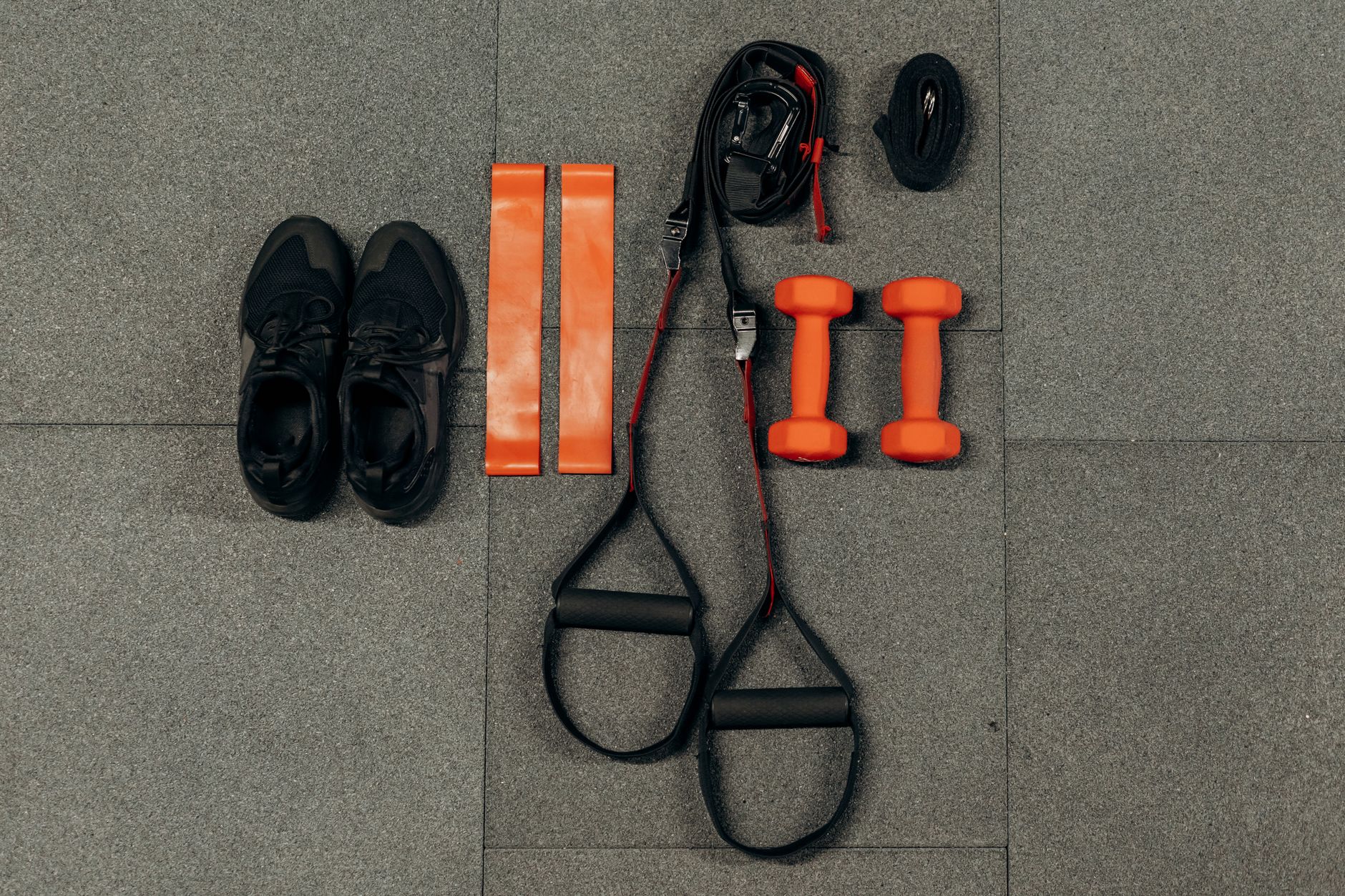
For serious band work, having a few key pieces of gear makes a difference. A good set of heavy-duty resistance bands is non-negotiable. We’re talking about bands that offer significant pull. For exercises that require anchoring higher or lower, a solid door anchor strap is a game-changer. It allows you to create a fixed point for rows, presses, and extensions, mimicking gym cable machines.
FAQ
-
What is the biggest difference between resistance bands vs weights for strength? Weights provide constant tension, while bands offer accommodating resistance that increases with stretch. This means bands force more work at the top of the movement, a different but effective stimulus.
-
Can I truly build muscle with resistance bands alone? Yes. If you consistently apply progressive overload by increasing band tension, reps, or decreasing rest, you can stimulate hypertrophy. It requires smart programming and consistent effort.
-
How do I know if my resistance bands are heavy enough? The last 2-3 reps of your set should be very challenging, forcing you to maintain strict form. If you can easily perform more than the target rep range, the band is too light.
-
Are resistance bands safe for home gym use? When used correctly, they’re very safe. Always check bands for wear and tear, and ensure your anchor points are secure to prevent them from snapping back unexpectedly.
-
Should I use resistance bands instead of weights or in addition to them? For pure strength and size, weights are still the king. However, bands are excellent for home gym lifters, travel, or as a supplementary tool to add intensity and work muscles in new ways.
Conclusion
The debate of resistance bands vs weights often comes down to accessibility and application. Bands are incredibly versatile and portable. They can be used anywhere. But you have to treat them like serious training tools. Stop the half-reps and the light, bouncy nonsense. If you’re serious about adding plates – or at least the equivalent tension – to your home workouts, start with a solid set of bands and a plan. Today, grab your bands. Pick three exercises from the program above. Perform them with controlled tempo, aiming for 10-15 reps. Feel the tension. That’s your starting point.
Related Articles
- How Much Protein Do You Actually Need Per Day to Build Muscle for Serious Lifters 2026
- Bulking vs Cutting for Serious Lifters: How to Do Both Right and When to Switch in 2026
- How to Build a Push Day Workout for Serious Lifters: Exercises, Sets, & Reps (2026)
- HIIT vs Steady State Cardio: Which Burns More Fat and When to Use Each
Where to Buy


💬 Join the Conversation
Have thoughts on this article? We'd love to hear from you.