When you purchase through links on our site, we may earn an affiliate commission. How it works.
Quick Takeaways
- The Purpose: A lifting belt on bench press creates a solid wall for your core to brace against, preventing energy leaks when transferring leg drive into the bar.
- The Threshold: Save the belt for working sets at or above 80% of your 1RM (or RPE 8+). Warm up without it to maintain raw motor control.
- The Execution: Wear the belt slightly higher or looser than your squat position so it doesn’t pinch your ribcage or restrict your torso arch.
A lifting belt for bench press is one of the most misunderstood tools in strength training. Walk into any commercial gym and you’ll see two extremes: lifters wearing a leather belt for 135-pound warmups, and ego lifters grinding through heavy 3-rep maxes with a hyper-extended lower back and zero core engagement. Both groups miss the mechanical reality of what a belt actually does on the bench.
A lifting belt isn’t a back-brace crutch, nor is it exclusive to heavy squats and deadlifts. It’s a rigid surface for your abdominal wall to push against, converting internal pressure into external stability. When you bench press with serious weight, your torso is the bridge between the floor and the barbell. If that bridge is soft, force leaks out before it ever reaches the bar.
In our experience across decades of raw heavy lifting, using a belt on the bench press becomes necessary the moment your leg drive starts flexing your spine instead of moving the iron. If you want to bench heavier weights safely, you’ve gotta understand the mechanics of intra-abdominal pressure, belt positioning, and proper bracing before you clip the lever shut.
Why Should You Use a Lifting Belt for Bench Press?
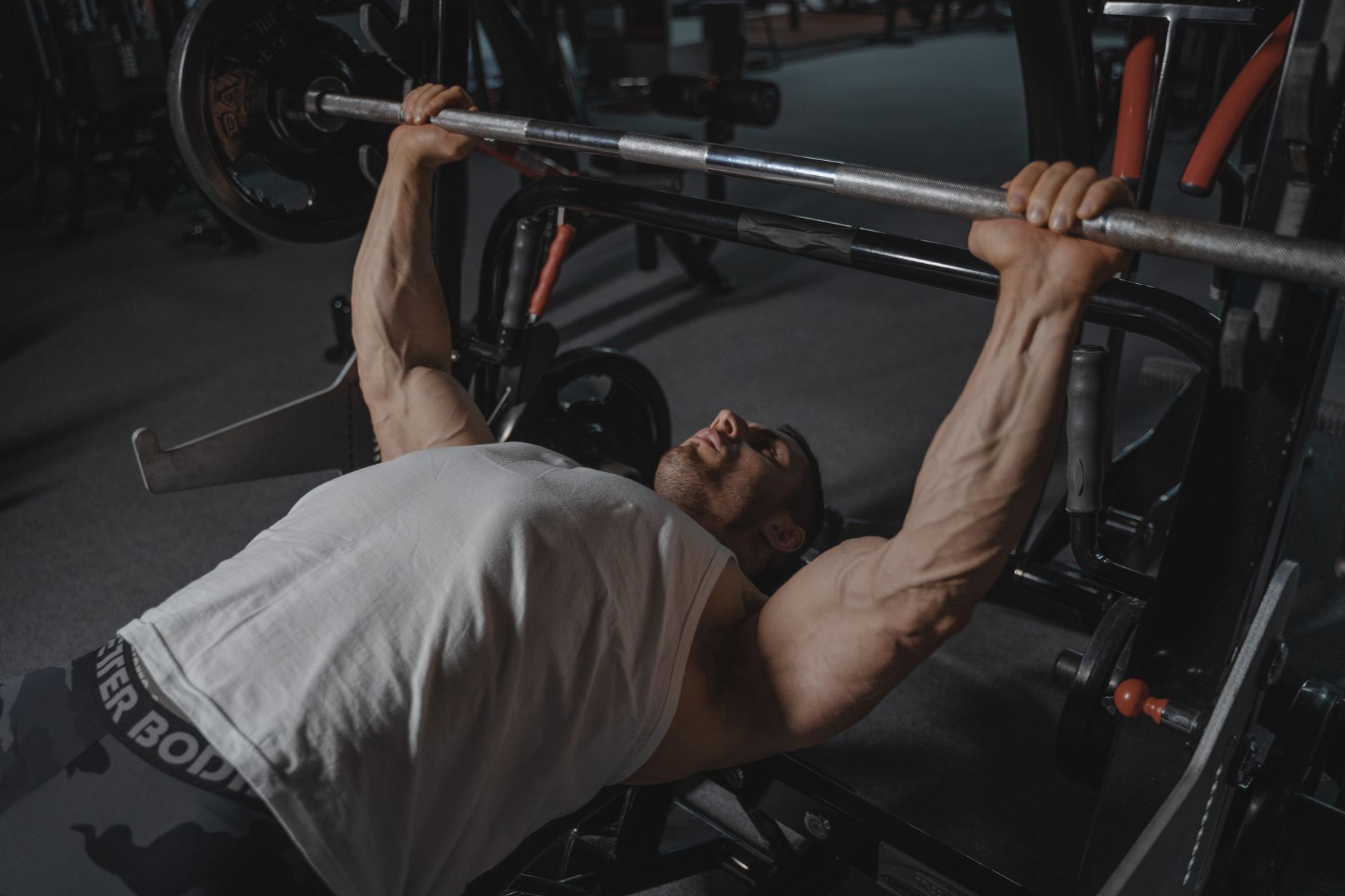
The primary bench press belt benefits boil down to force transfer and spinal rigidity. When you bench correctly, you don’t lie flat like a corpse. You set a tight upper-back arch, plant your feet firmly into the platform, and drive your hips toward the head of the bench to push heavy weight off your chest.
Without a belt, that leg drive pushes force up through your legs and into your lower back and abdomen. If your core is unbraced or weak, your lumbar spine absorbs that energy, causing your lower back to over-arch or collapse under heavy loads. A high-quality belt fixes this energy leak by creating a closed pneumatic cylinder inside your abdominal cavity.
When you breathe into a belt, three specific mechanical advantages take place:
- Elimination of Force Leaks: Leg drive travels in a straight line from the floor, through a braced torso, and directly into the upper back and triceps.
- Arch Stabilization: The belt locks your ribcage and pelvis into a stable, repeatable relationship, preventing your lumbar spine from shifting midway through a grinding rep.
- Proprioceptive Feedback: Pushing your stomach outward into a rigid piece of leather gives your nervous system direct tactile feedback, forcing a harder abdominal contraction.
If you treat the bench press as an upper-body-only movement, you’ll hit a plateau early. When the weights get heavy, the bench press is a full-body lift, and a belt ensures your core holds up its end of the bargain.
How Does Intra-Abdominal Pressure Improve Bench Press Performance?
Related reading: 4-Day Upper Lower Split: The Complete Workout Plan for Strength & Size
Intra-abdominal pressure (IAP) is the mechanical force generated when you pack air into your belly and contract your abdominal muscles against an immobile object. Think of your torso as an unopened aluminum soda can. When the can is full and sealed, you can stand on top of it without crushing it. If you pop the top and drain the pressure, the same thin metal collapses under minimal weight.
To build true IAP on the bench press, stop breathing into your chest. Chest breathing raises your shoulders, kills your upper-back tightness, and flattens your arch.
The 3-Step Bench Brace Strategy
- Step 1: The 360-Degree Expansion. Pull air deep into your diaphragm—not your lungs. Try to expand your obliques, belly, and lower back outward simultaneously into the leather.
- Step 2: The Abdominal Clamp. Flex your abs as if someone is about to drop a 45-pound plate directly onto your stomach. Don’t pull your belly button in toward your spine; push out against the belt wall.
- Step 3: Lock and Lower. Unrack the barbell after your air is set. Maintain that internal pressure all the way down to your sternum, pause, and explode upward while exhaling through tightly pursed lips past the sticking point.
If you lose this breath on rep three or four, your chest collapses, your elbows flare out prematurely, and the lift turns into a grinding rotator-cuff rescue mission.
When Is the Right Time to Put On a Belt for Bench Pressing?
Related reading: Beginner Workout Plan: 3-Day Full-Body Program with 8-Week Progression
You don’t need a belt for light sets, chest hypertrophy work, or speed technique reps. Slipping a belt on for every single set deprives your deep core stabilizers of the work needed to build baseline dynamic strength.
Use the belt when the mechanical stress matches the purpose of the gear:
[Warmup Sets: 0% - 70% 1RM] ---------> NO BELT (Build natural core stability) [Working Sets: 75% - 82% 1RM] --------> OPTIONAL (Based on fatigue & stability) [Heavy Max / Singles: 85%+ 1RM] ------> BELT ON (Maximize leverage & force output) If your 1-rep max on the bench press is 315 pounds, any set under 225 pounds should be completed raw without a belt. Once you cross 80% (around 250+ pounds), strap the belt on to reinforce your position during your heaviest effort sets.
The Heavy Bench Press Strength & Stability Routine
To get the most out of a lifting belt, your programming must integrate belt work on high-intensity days while leaving lighter accessory movements unbelted. Below is a raw strength protocol designed to maximize bench mechanics, leg drive, and upper-body power over a four-week cycle.
Weekly Bench Press Protocol
| Exercise | Sets | Reps | Rest | Tempo / Belt Status |
|---|---|---|---|---|
| Barbell Bench Press | 4 | 3–5 | 3–4 min | 2-1-X-0 (Belt ON for work sets) |
| Close-Grip Bench Press | 3 | 6–8 | 2 min | 3-0-1-0 (Belt OFF) |
| Incline Dumbbell Press | 3 | 8–10 | 90 sec | Controlled, full stretch (Belt OFF) |
| Chest-Supported Row | 4 | 8–10 | 2 min | Squeeze shoulder blades (Belt OFF) |
| Heavy Cable Triceps Pushdown | 3 | 10–12 | 60 sec | Hard lockouts at bottom (Belt OFF) |
How to Execute This Session
- Warmup (No Belt): Perform 2-3 light sets of flat benching (e.g., bar x 15, 50% x 8, 65% x 5). Focus on driving your shoulder blades deep into the bench pad.
- Work Sets (Belt On): Buckle your belt on set 1 of the main barbell bench press. Set your arch, drive your toes into the ground, take a massive belly breath, and unrack.
- Tempo Execution: Lower the bar under control for 2 seconds. Let it rest solidly on your lower sternum for 1 full second without sinking into your ribcage. Explode up (X) to lockout.
Progression Strategy for Heavy Bench Load
Strength gains don’t happen by accident; they require systematic linear or wave progression. Don’t attempt to add 10 pounds to the bar every single week while sacrificing your arch and control.
Week 1: 4 sets x 5 reps @ 78% 1RM (Focus on consistent belt tension) Week 2: 4 sets x 4 reps @ 82% 1RM (Increase leg drive force) Week 3: 4 sets x 3 reps @ 85% 1RM (Peak load / maximum intra-abdominal compression) Week 4: Deload — 3 sets x 5 reps @ 65% 1RM (NO BELT — technique recovery) Track your performance across each phase. If you hit all prescribed reps in Week 3 with rock-solid technique and zero lumbar displacement, increase your base 1RM calculation by 5 to 10 pounds for the next four-week block.
What Are the Most Common Mistakes When Bench Pressing With a Belt?
Wearing a belt incorrectly can ruin your leverage faster than not wearing one at all. Call out these bro-science myths and technical blunders before they stall your bench press progress.
1. Wearing the Belt Too Tight
This is the single most common error. Squatting requires a rock-hard belt setup because your torso stays relatively upright. Bench pressing requires a physical torso arch. If you cinch your lever or prong belt to the absolute last hole, you’ll crush your ribcage, restrict your diaphragm from filling with air, and flatten your upper back arch before you even unrack the weight.
The Fix: Set your bench press belt one hole looser than your squat belt setup. You should be able to slide two fingers between your stomach and the leather when standing upright.
2. Placing the Belt Too Low on the Hips
If the belt sits directly over your Iliac crest (hip bones) while lying on a flat bench, the lower edge will dig into your thighs and jam your hips down. This completely cuts off your leg drive.
The Fix: Position the belt slightly higher on your mid-torso—roughly across your belly button or right beneath your sternum. Find the pocket where you can press outward without the belt hitting your hip flexors when setting your feet.
3. Relying on Magic Gear Instead of Real Tension
A belt doesn’t lift the weight for you. We see gym lifters slap a thick belt on, flop down on the bench with flat feet, bounce 225 off their ribcage, and wonder why their chest isn’t growing. A belt is an amplifier of tension, not a substitute for it. If your upper back is soft and your legs are limp, a belt is just an expensive waist accessory. Put in the damn work to master your tightness first.
Recommended Gear for Heavy Bench Pressing
When selecting gear for benching, you don’t need a shelf full of useless gimmicks. You need simple, high-durability gear built for serious heavy metal.
- A Solid Power Belt: For heavy pressing, stick to a stiff leather design that won’t roll or fold under pressure. A reliable 10mm powerlifting belt provides the ideal balance between rigid support and the flexibility needed to set a tight bench arch.
- Heavy-Duty Wrist Support: Heavy bench pressing puts immense force directly through the small joints of your wrists. Pairing your belt with a pair of rigid stiff wrist wraps keeps your wrist joints stacked directly over your forearms, eliminating extension stress under max loads.
Not sure where your max actually sits? Our 1 rep max calculator runs all seven published formulas on the same set and shows you how far apart they land, so you can see how much to trust the number before you program around it.
Frequently Asked Questions
Does wearing a belt on bench press decrease core activation?
No, published electromyography (EMG) data shows that wearing a belt actually increases or maintains core muscle activation under heavy loads. The belt gives your abdominal wall an external surface to push against, causing your rectus abdominis and obliques to contract harder than they would without gear.
Should a bench press belt be tighter or looser than a squat belt?
A bench press belt should generally be worn one notch looser than a squat belt. You need slightly more room in your midsection to pull your shoulder blades down and set a tight upper-back arch without pinching your ribs or restricting deep diaphragmatic breathing.
What thickness belt is best for the bench press?
A 10mm thick leather belt is usually ideal for the bench press. While 13mm belts are great for heavy squats, they can be too stiff and wide to comfortably lie down on a flat bench pad without digging painfully into your ribs and hips.
Will a lifting belt help fix my arch on the bench press?
A belt won’t magically create an arch if you lack thoracic spine mobility, but it will stabilize the arch you do have. By holding your mid-torso rigid, the belt prevents your lower back from flattening out or swaying under heavy leg drive.
Can beginners use a lifting belt for bench press?
Beginners should skip the belt for their first 6 to 12 months of serious strength training. Focus first on learning how to brace your core naturally, set your shoulder blades, and master bar path dynamics before introducing supportive gear to your routine.
The Bottom Line
A lifting belt isn’t a shortcut, and it won’t magically add 50 pounds to your bench press overnight. What it will do is lock down your torso, eliminate force leaks, and turn your leg drive into raw upward barbell speed when the iron gets heavy. Stop using it as a back brace, stop strapping it on for warmups, and start using it with intent.
Your next move is simple: on your next heavy bench day, set your belt one notch looser than your squat fit, drive your feet into the floor, pack your belly with air, and push that bar through the roof.
Related Articles
- How Much Protein Do You Actually Need Per Day to Build Muscle for Serious Lifters 2026
- Bulking vs Cutting for Serious Lifters: How to Do Both Right and When to Switch in 2026
- How to Build a Push Day Workout for Serious Lifters: Exercises, Sets, & Reps (2026)
- HIIT vs Steady State Cardio: Which Burns More Fat and When to Use Each
Where to Buy


💬 Join the Conversation
Have thoughts on this article? We'd love to hear from you.