
When you purchase through links on our site, we may earn an affiliate commission. How it works.
- The Sweet Spot: 10 to 20 hard, working sets per muscle group, per week.
- The Frequency Split: Divide this volume across 2 to 3 sessions per week to keep set quality high and maximize protein synthesis.
- The Intensity Rule: Every set must be taken within 1 to 3 reps of true muscular failure (RPE 8-10) to count as actual volume.
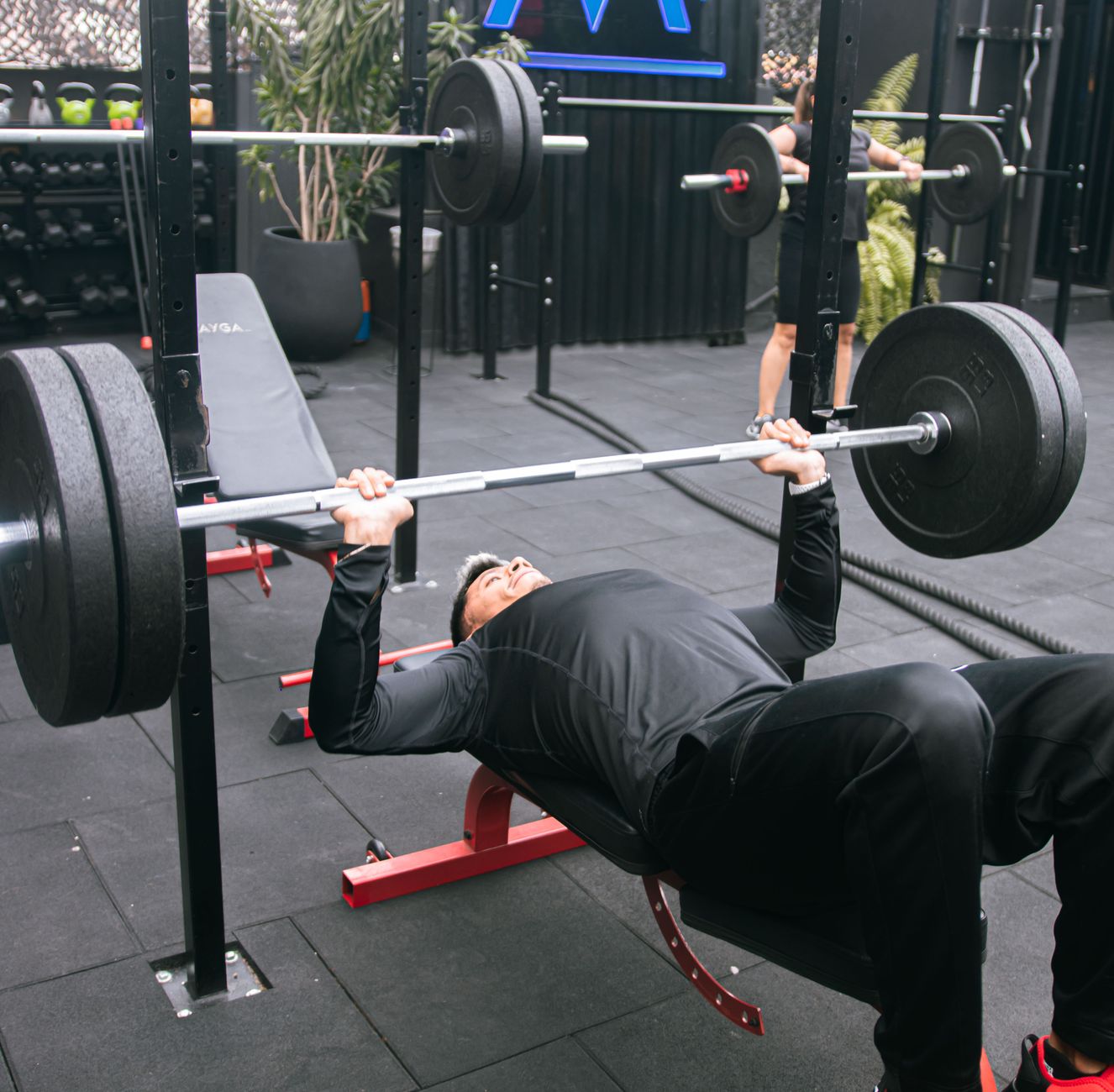
If you want to know how many sets per week to build muscle, you need to stop listening to the social media influencers who live on SARMs and lighting tricks. The year we cut our chest volume in half was the year our shirts actually started fitting tight across the pecs. I used to go into the gym and blast 30 sets of chest on a Monday, chasing a skin-splitting pump that felt great for an hour but left me sore and weak for a week. It was ego lifting, plain and simple. We were trading quality for quantity and calling it hard work.
In our experience, high volume is the easiest way to mask lazy training. Once we stopped counting the total number of exercises and started making every single set count, the gains finally followed. You don’t need to live in the gym to grow. You need a targeted, ruthless approach to your training volume for hypertrophy. If you’re serious about adding plates to the bar and real meat to your frame, you need to understand the recovery curve. Stop half-repping your way through endless drop sets. Let’s talk about the cold, hard numbers of real growth.
Why It Works: The Science of Effective Repetitions
Muscle growth isn’t a reward for surviving a three-hour gym session. It’s an adaptive response to mechanical tension. When you perform a set, your body doesn’t count the reps; it senses the force generated by your muscle fibers.
The biggest lie in modern bodybuilding is that more is always better. It isn’t. We call the extra, useless sets “junk volume.” If you’re doing 8 different exercises for chest in a single workout, those last 4 exercises are doing nothing but chewing through your recovery capacity. Your muscles are already fatigued, your force output is garbage, and you’re just digging a deeper recovery hole.
To trigger hypertrophy, you need high-effort reps where the bar slows down despite your best efforts to push it fast. These are your “effective reps.” They only happen when you get close to muscular failure. If you do 3 sets of 10 with a weight you could easily lift for 20, you did exactly zero effective reps. You just wasted your time.
By keeping your weekly sets within a specific, high-intensity range, you ensure that every single set you perform actually stimulates new muscle growth. You stop wasting energy on garbage sets and start forcing your body to adapt.
Why Does Training Volume for Hypertrophy Have a Sweet Spot?
Related reading: 4-Day Upper Lower Split: The Complete Workout Plan for Strength & Size
In our experience, training volume operates on an inverted U-curve. Too little volume (under 5 sets per week) won’t provide enough stimulus to trigger significant growth. Too much volume (over 25 sets per week) exceeds your body’s ability to repair and rebuild the damaged tissue.
Here is what happens when you cross the line into excessive volume:
- Central Nervous System (CNS) Fatigue: Your brain can’t send signals to your muscles fast enough, leading to chronic weakness.
- Systemic Inflammation: Your body is too busy trying to repair massive amounts of muscle damage to actually build new, larger fibers.
- Joint and Tendon Degradation: Your connective tissues take a beating that they can’t recover from, leading to tendonitis and forced time off the gym.
The sweet spot for the vast majority of natural lifters is 10 to 20 working sets per muscle group, per week. If you’re on the lower end of this range, you must bring extreme intensity to every set. If you’re on the higher end, you need to ensure your sleep, hydration, and nutrition are completely dialed in.
How Many Sets Per Week to Build Muscle for Every Muscle Group?
Not all muscle groups are created equal. You can’t train your hamstrings with the same volume as your side delts and expect to walk the next day. Larger muscles that undergo deep stretches under load require more recovery time and fewer total sets. Smaller muscles can handle more frequency and slightly higher volume because they don’t cause massive systemic fatigue.
Here is how we split the weekly volume across target muscle groups:
Large Muscle Groups (10–16 Sets Per Week)
- Quads & Hamstrings: These are massive muscle groups. Exercises like heavy squats and Romanian deadlifts cause immense systemic fatigue. Keep these to 10–14 high-quality sets per week.
- Chest & Back: These require a mix of heavy presses, pulls, and rows. Aim for 12–16 sets per week, split across two sessions.
Related reading: Beginner Workout Plan: 3-Day Full-Body Program with 8-Week Progression
Small Muscle Groups (8–12 Sets Per Week)
- Biceps & Triceps: Remember, your arms are heavily involved in all your compound presses and pulls. You don’t need 20 sets of curls. 8 to 12 direct, hard sets of arm work per week is plenty to spark growth.
- Side/Rear Delts & Calves: These muscles recover quickly and can handle the higher end of the volume spectrum (12–15 sets) if you split them across multiple days.
The Iron-Clad Hypertrophy Program
This is a sample 4-day Upper/Lower split designed to hit the exact volume sweet spot for maximum growth. We don’t do fluff. We don’t do high-rep pump work. Put on your weightlifting belt for the heavy compound movements, lock in, and execute.
Upper Day A (Monday)
| Exercise | Sets | Reps | Rest (Minutes) | Target Muscle Group |
|---|---|---|---|---|
| Incline Barbell Press | 3 | 6-8 | 3.0 | Chest, Front Delts |
| Weighted Pull-Ups | 3 | 6-8 | 3.0 | Lats, Upper Back |
| Flat Dumbbell Press | 3 | 8-10 | 2.5 | Chest |
| Chest-Supported Row | 3 | 10-12 | 2.0 | Mid-Back, Lats |
| Cable Lateral Raises | 4 | 12-15 | 1.5 | Side Delts |
| Incline Dumbbell Curls | 3 | 10-12 | 1.5 | Biceps |
Lower Day A (Tuesday)
| Exercise | Sets | Reps | Rest (Minutes) | Target Muscle Group |
|---|---|---|---|---|
| Barbell Back Squats | 3 | 6-8 | 3.0 | Quads, Glutes |
| Romanian Deadlifts | 3 | 8-10 | 3.0 | Hamstrings, Glutes |
| Leg Press (Deep ROM) | 3 | 10-12 | 2.5 | Quads |
| Seated Leg Curls | 3 | 12-15 | 2.0 | Hamstrings |
| Standing Calf Raises | 4 | 10-12 | 1.5 | Calves |
Upper Day B (Thursday)
| Exercise | Sets | Reps | Rest (Minutes) | Target Muscle Group |
|---|---|---|---|---|
| Standing Overhead Press | 3 | 6-8 | 3.0 | Shoulders, Triceps |
| Barbell Row (Overhand) | 3 | 8-10 | 2.5 | Upper Back, Lats |
| Cable Crossover (Low-to-High) | 3 | 12-15 | 1.5 | Chest |
| Lat Pulldowns | 3 | 10-12 | 2.0 | Lats |
| Dumbbell Lateral Raises | 4 | 12-15 | 1.5 | Side Delts |
| Overhead Cable Tricep Ext. | 3 | 10-12 | 1.5 | Triceps |
Lower Day B (Friday)
| Exercise | Sets | Reps | Rest (Minutes) | Target Muscle Group |
|---|---|---|---|---|
| Barbell Romanian Deadlifts | 3 | 6-8 | 3.0 | Hamstrings, Glutes |
| Hack Squats | 3 | 8-10 | 2.5 | Quads |
| Bulgarian Split Squats | 2 | 10-12 | 2.0 | Quads, Glutes |
| Lying Leg Curls | 3 | 10-12 | 2.0 | Hamstrings |
| Seated Calf Raises | 4 | 15-20 | 1.5 | Calves |
How to Progress Your Volume Week Over Week
If you bench press 225 pounds for 3 sets of 8 today, and you’re still doing 225 pounds for 3 sets of 8 six months from now, you won’t have grown a single millimeter of muscle. Volume isn’t just about the number of sets; it’s about the total tonnage lifted over time.
Don’t start your training cycle at 20 sets per week. That leaves you nowhere to go. Start at the lower end of the spectrum—around 10 to 12 sets per week for major muscle groups.
Use the Double Progression Method:
- Choose a target rep range (e.g., 6 to 8 reps).
- Find a weight that allows you to hit 6 reps on all working sets with good form.
- Keep that weight constant until you can perform the maximum rep target (8 reps) on all sets.
- Once you hit 3 sets of 8, increase the load by 5 to 10 pounds and start back at 6 reps.
Only add sets when your strength progression stalls and you’re fully recovered. If you hit a wall after several weeks, add one single set to that specific exercise. Don’t add three new exercises. Small, incremental increases in volume are what force the body to grow without breaking it down.
Form Cues & Common Mistakes That Kill Progress
We see it every single day in commercial gyms: guys loading up four plates on the leg press, moving the carriage three inches, and counting it as a set. That’s not training; it’s a circus act. If you want real growth, you must clean up your execution.
1. Stop Counting Warm-Up Sets
If your working weight on the bench press is 225 pounds, your sets of 135, 185, and 205 don’t count toward your weekly volume. Those are warm-ups. They’re meant to prepare your joints and nervous system, not trigger hypertrophy. Your first real working set starts when you unload on the target weight and push it close to failure.
2. Control the Negative (Eccentric Phase)
Gravity isn’t your personal trainer. Stop letting the weight drop like a stone on the eccentric portion of the lift. Control the descent for 2 to 3 seconds. The eccentric phase is where the majority of muscle damage and subsequent hypertrophy occurs. If you cheat the negative, you’re throwing away half of your results.
3. Use a Full Range of Motion
A partial rep gets you partial results. Take your muscles through a deep, loaded stretch. Pause for a split second at the bottom of a squat or a dumbbell bench press to eliminate momentum. This forces the muscle to work from a dead stop, recruiting more motor units and driving more growth.
The Gear We Rely On
When you start pushing the boundaries of your volume, your grip and joints will often try to quit before your target muscles do. We don’t let weak links dictate our growth.
If your grip starts failing during heavy rows, pull-ups, or Romanian deadlifts, you’re short-changing your back and hamstrings. We highly recommend grabbing a pair of heavy-duty lifting straps to take your grip out of the equation. This allows you to focus 100% of your mental and physical energy on pulling with your back and hamstrings, ensuring those target muscles actually reach the level of stimulation they need to grow.
FAQ
Can I build muscle with only 5 sets per week?
Yes, especially if you’re a beginner or returning from a layoff. However, advanced lifters will quickly adapt to this low stimulus and will require a higher training volume for hypertrophy to keep progressing.
Do warm-up sets count toward my weekly volume?
Absolutely not. Warm-ups are designed to prepare your nervous system and lubricate your joints, not to damage muscle tissue. Only count sets that are performed with high intensity within 1 to 3 reps of failure.
Should I do more sets for lagging muscle groups?
Yes, you can increase the volume for a lagging muscle group up to 20 sets per week, but you must temporarily reduce the volume of your stronger muscle groups to compensate and maintain your overall recovery capacity.
How does training frequency affect my weekly set count?
Splitting your weekly volume across 2 or 3 sessions allows you to perform higher-quality sets with more weight and better focus. Doing 12 sets of chest in one day leads to massive performance drops by set 8, whereas doing 6 sets twice a week keeps every single rep explosive.
Is 30 sets per week too much for chest?
Yes, for a natural lifter, 30 sets in a single week is almost entirely junk volume. You’ll spend more time recovering from systemic inflammation than actually synthesizing new muscle proteins.
Make the Iron Work for You
Stop measuring your worth by how long you spend in the gym or how many exercises you can cram into a single workout. The iron doesn’t care about your feelings, and it certainly doesn’t reward empty sweat.
Take a hard look at your current training program today. If you’re doing more than 20 working sets per muscle group each week, cut it back. Drop the ego, strip the weight down to something you can actually control, and make every single rep count. Use the program we laid out above, track your progress in a real logbook, and eat to grow. The work is simple, but it’s not easy. Now get under the bar and put in the damn work.
Related Articles
- How Much Protein Do You Actually Need Per Day to Build Muscle for Serious Lifters 2026
- Bulking vs Cutting for Serious Lifters: How to Do Both Right and When to Switch in 2026
- How to Build a Push Day Workout for Serious Lifters: Exercises, Sets, & Reps (2026)
- HIIT vs Steady State Cardio: Which Burns More Fat and When to Use Each
Where to Buy


💬 Join the Conversation
Have thoughts on this article? We'd love to hear from you.