
When you purchase through links on our site, we may earn an affiliate commission. How it works.
- Switch your rep ranges.
- Incorporate intensity techniques.
- Prioritize recovery like it’s your job.
The year I stopped skipping deload weeks and actually worked on my weaknesses, my squat jumped 40 lb. It wasn’t magic. It was smart training. If you’re serious about adding plates to the bar and the damn thing won’t budge, you’re likely stuck in a rut. You’re doing the same thing, expecting different results. That’s the definition of insanity, and it won’t build a bigger bench or a stronger deadlift. We’ve all been there. The bar feels like it’s glued to the rack or the floor. Your ego is bruised. You start looking for miracle supplements or some obscure exercise that’s suddenly going to unlock your potential. Stop it. Most of the time, the solution is far simpler and far more fundamental. It’s about changing the stimulus and respecting the process. This isn’t about chasing Instagram trends or listening to some kid with a massive ego and no results. This is about putting in the work, the smart work, and breaking through.
Why Your Progress Has Stalled
It’s simple biology. Your body adapts. If you constantly hit it with the same stimulus, it finds the path of least resistance. It becomes efficient. Efficiency is the enemy of progress when you’re chasing new personal records. Think of it like this: if you only ever lift 100 lb for 5 reps, your body will get really, really good at lifting 100 lb for 5 reps. It won’t build the capacity to lift 105 lb for 5 reps. You need to force adaptation. This means introducing variables that challenge your system in new ways. It’s not about reinventing the wheel; it’s about using the wheel in different ways. We’ve seen lifters get stuck for years because they refuse to deviate from a single, stale program. They’re married to their comfort zone. That’s where growth goes to die. The underlying principle is progressive overload, but you can’t just keep adding weight to the same old sets and reps forever. You need to manipulate other variables.
How to Break Through a Strength Plateau
Related reading: 4-Day Upper Lower Split: The Complete Workout Plan for Strength & Size
This isn’t a one-size-fits-all magic bullet. It’s a framework. We’re going to change your rep schemes, introduce intensity techniques, and dial in your recovery. This program is designed to shock your system and force it to grow stronger. It’s not about feeling good all the time; it’s about getting stronger.
Here’s the blueprint. We’ll focus on a four-day split for this phase. This allows for adequate recovery between sessions for each major muscle group.
- Day 1: Lower Body (Strength Focus)
- Day 2: Upper Body (Volume Focus)
- Day 3: Rest
- Day 4: Lower Body (Hypertrophy Focus)
- Day 5: Upper Body (Intensity Focus)
- Day 6 & 7: Rest
The Program: Shock the System
This is the work. No BS, just the exercises and the numbers. We’re going to vary the rep ranges to hit different muscle fiber types and energy systems. On the strength days, we’re pushing heavy weight for lower reps. On the volume days, we’re building muscle mass with higher reps. On the intensity days, we’re using techniques to push past perceived limits.
Day 1: Lower Body (Strength Focus)
| Exercise | Sets | Reps | Rest (min) | Notes |
|---|---|---|---|---|
| Barbell Back Squat | 4 | 3-5 | 3-4 | Work up to heavy sets. |
| Romanian Deadlift | 3 | 6-8 | 2 | Focus on hamstring stretch. |
| Leg Press | 3 | 8-10 | 2 | Controlled eccentric. |
| Standing Calf Raise | 4 | 10-15 | 1 | Full stretch and squeeze. |
Day 2: Upper Body (Volume Focus)
| Exercise | Sets | Reps | Rest (min) | Notes |
|---|---|---|---|---|
| Bench Press | 4 | 8-12 | 1.5-2 | Focus on chest contraction. |
| Barbell Row | 4 | 8-12 | 1.5-2 | Pull to sternum, squeeze lats. |
| Overhead Press (Barbell) | 3 | 8-10 | 2 | Drive through the bar. |
| Lat Pulldown | 3 | 10-15 | 1.5 | Feel the back muscles working. |
| Dumbbell Bicep Curl | 3 | 12-15 | 1 | Controlled negatives. |
| Triceps Pushdown | 3 | 12-15 | 1 | Squeeze at the bottom. |
Day 4: Lower Body (Hypertrophy Focus)
| Exercise | Sets | Reps | Rest (min) | Notes |
|---|---|---|---|---|
| Front Squat | 3 | 8-12 | 2 | Focus on quad engagement. |
| Glute-Ham Raise (GHR) | 3 | As many as possible | 2 | Aim for controlled reps. |
| Leg Curl (Seated) | 3 | 12-15 | 1.5 | Isolate hamstrings. |
| Leg Extension | 3 | 15-20 | 1 | Burnout set. |
| Seated Calf Raise | 4 | 15-20 | 1 | Focus on the soleus. |
Day 5: Upper Body (Intensity Focus)
| Exercise | Sets | Reps | Rest (min) | Notes |
|---|---|---|---|---|
| Bench Press | 5 | 3-5 | 3-4 | Use cluster sets on the last set. |
| Pull-ups | 4 | As many as possible | 2 | Add weight if needed. |
| Incline Dumbbell Press | 3 | 6-8 | 2 | Focus on upper chest. |
| Face Pulls | 3 | 15-20 | 1 | Shoulder health. |
| Hammer Curls | 3 | 10-12 | 1 | Forearm and bicep development. |
| Overhead Triceps Ext (DB) | 3 | 10-12 | 1 | Stretch at the bottom. |
Intensity Techniques Explained:
- Cluster Sets: For your last heavy set on Bench Press, break it down. Do 1 rep, rack for 10-15 seconds, do another rep, rack, and repeat until you hit your target reps. This allows you to move more weight for more reps than you could straight through. It’s not about resting until you’re fully recovered; it’s about brief, targeted rests to enable more quality reps.
- Drop Sets: On isolation exercises like Leg Extensions or Triceps Pushdowns, after your last rep, immediately reduce the weight by 20-30% and perform as many reps as possible. This pushes the muscle to failure.
- Rest-Pause: Similar to cluster sets but typically used on higher rep ranges. Perform a set to near failure, rest for 10-15 seconds, then squeeze out a few more reps.
This program is for 4-6 weeks. After that, you need to re-evaluate. Don’t get married to it. The goal is to break the plateau, not to perform this exact workout for years.
How to Progress Week Over Week
This is where most people screw up. They write down numbers and hope for the best. We need a system.
- For Strength Days (3-5 reps): Aim to add 5 lb to your main lift (Squat, Bench) each week. If you hit all your reps for all sets, you’ve earned that weight increase. If you miss reps on the last set, stay at that weight next week and try to hit it. Don’t be afraid to stick with a weight for a couple of weeks if it’s challenging.
- For Volume/Hypertrophy Days (8-15+ reps): Aim to add 1-2 reps to each set. Once you hit the top end of the rep range for all sets, then increase the weight by the smallest increment possible (usually 2.5-5 lb) and aim for the lower end of the rep range again.
- For Intensity Techniques: Focus on quality reps. For drop sets and rest-pause, the goal is to achieve more total reps than the previous week with the same weight. Don’t sacrifice form for an extra rep.
This structured progression ensures you’re constantly challenging your body. If you’re not making progress week to week, you’re not doing it right.
Form Cues & Common Mistakes
Related reading: Beginner Workout Plan: 3-Day Full-Body Program with 8-Week Progression
Let’s talk about what actually matters. Ego lifting is rampant. People load up the bar and sacrifice form like their life depends on it. It doesn’t. It only guarantees injury and stalled progress.
Squat:
- Cue: Drive your knees out. Think about spreading the floor. Keep your chest up.
- Mistake: Letting your knees cave in (valgus collapse). This is a fast track to knee pain. You’re not strong; you’re just unstable. Use a weightlifting belt for heavy sets.
- Mistake: Not hitting depth. If your ass isn’t going below your knees, you’re not squatting. You’re doing half-reps.
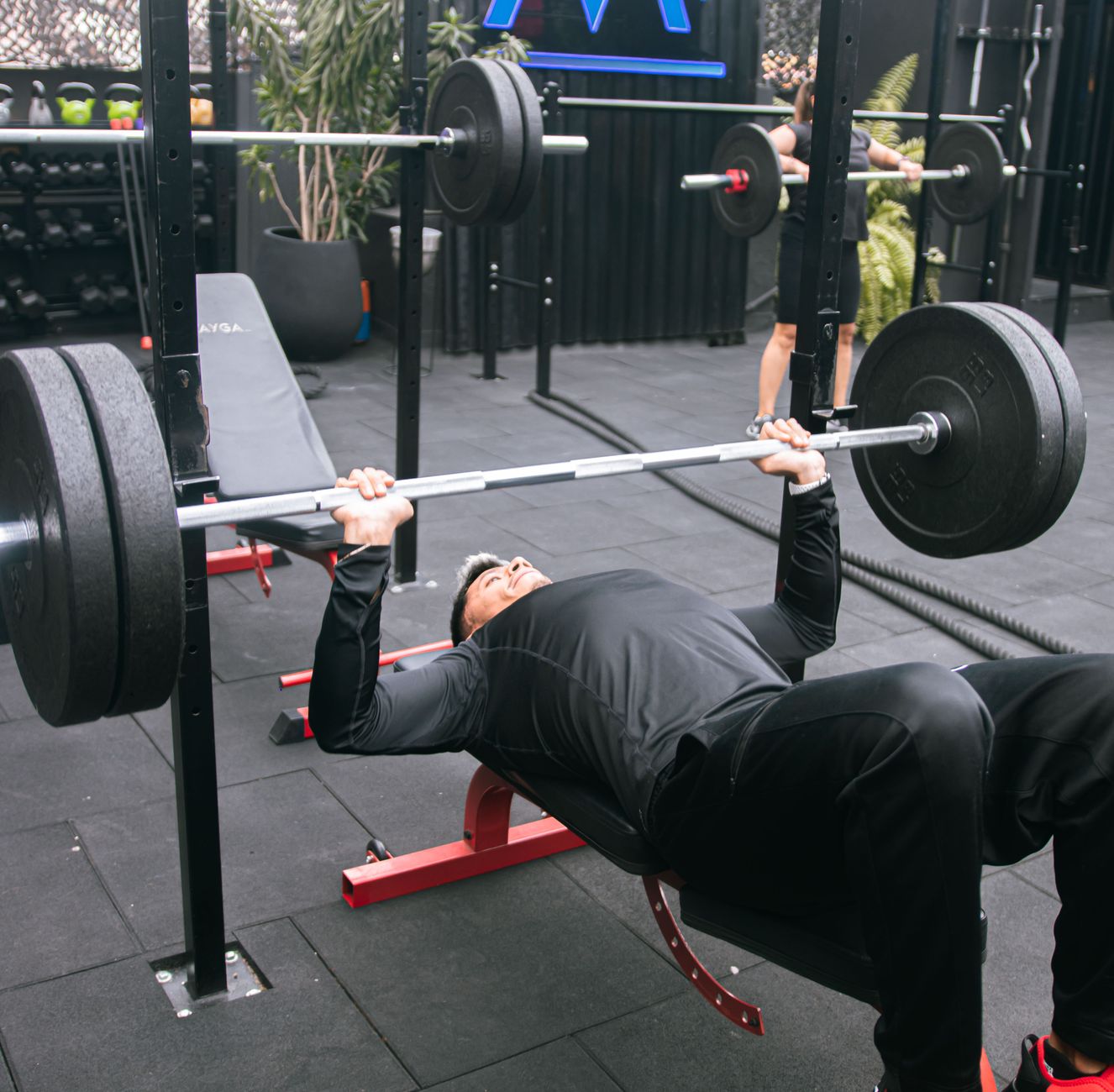
Bench Press:
- Cue: Retract your shoulder blades and squeeze them together. Create an arch in your upper back. Drive your feet into the floor.
- Mistake: Flaring your elbows too wide. This hammers your shoulders. Keep them tucked at about a 45-degree angle.
- Mistake: Bouncing the bar off your chest. This is cheating and dangerous. Control the descent.
Deadlift (Romanian):
- Cue: Keep a slight bend in your knees. Push your hips back as far as possible. Keep the bar close to your body. Feel the stretch in your hamstrings.
- Mistake: Rounding your lower back. This is a recipe for a herniated disc. Your back should remain neutral.
- Mistake: Pulling with your arms. The movement comes from the hips.
Overhead Press:
- Cue: Brace your core hard. Squeeze your glutes. Press the bar directly overhead, slightly back.
- Mistake: Using too much leg drive. While a little is okay for maximal lifts, for programmed reps, focus on shoulder and triceps strength.
- Mistake: Not finishing the lockout. Fully extend your arms at the top.
If you’re constantly failing reps because your form breaks down, you’re lifting too heavy. Scale it back. No one cares how much you claim you can lift if it looks like shit.
Gear I Use When the Bar Won’t Move
When I’m pushing heavy singles or working up on squats, a weightlifting belt is non-negotiable. It provides intra-abdominal pressure, which stabilizes your spine and allows you to lift more weight safely. For heavy deadlifts, especially on higher rep sets or when fatigue sets in, lifting straps are a godsend. They take grip fatigue out of the equation so you can focus on the pull.
Frequently Asked Questions
What if I don’t have access to all the equipment? Adapt. Substitute with what you have. If you can’t do GHRs, do more hamstring curls. If you don’t have a leg press, do more lunges. The principles of varied rep ranges and intensity techniques can be applied to most exercises.
How long should I run this program? Four to six weeks is ideal. Any longer, and your body might start to adapt to this specific stimulus again. After the cycle, take a deload week before starting a new program.
Is it okay to feel sore all the time? Some soreness is normal, especially when introducing new stimuli. However, constant debilitating soreness means you’re not recovering. Dial in your sleep and nutrition. It’s not a badge of honor; it’s a sign you’re overtraining or undertreating.
What if I’m still not breaking my plateau? Review your recovery. Are you sleeping 7-9 hours? Eating enough protein and calories? Are you managing stress? If those are dialed in, look at your weak points. Are you consistently neglecting certain muscle groups or movements?
When should I consider a deload week? After 4-6 weeks of hard training, or if you feel consistently fatigued, your lifts are decreasing, or you have nagging joint pain. A deload week involves significantly reducing volume and intensity (e.g., 50% of your normal weights, half the sets/reps).
Conclusion
Stalling on the bar is a frustrating reality for many lifters. But it’s not a life sentence. You’ve got the roadmap now. Stop guessing. Stop listening to bro-science. This program forces adaptation by varying your stimulus, pushing your limits with intensity techniques, and emphasizing recovery. Your next step is simple: look at your calendar, schedule your first workout of this program, and commit to the damn work. No more excuses. It’s time to move some weight.
Related Articles
- How Much Protein Do You Actually Need Per Day to Build Muscle for Serious Lifters 2026
- Bulking vs Cutting for Serious Lifters: How to Do Both Right and When to Switch in 2026
- How to Build a Push Day Workout for Serious Lifters: Exercises, Sets, & Reps (2026)
- HIIT vs Steady State Cardio: Which Burns More Fat and When to Use Each
Where to Buy


💬 Join the Conversation
Have thoughts on this article? We'd love to hear from you.